
Tariffs Up, Treasury Down: Why Washington’s Red Ink Matter
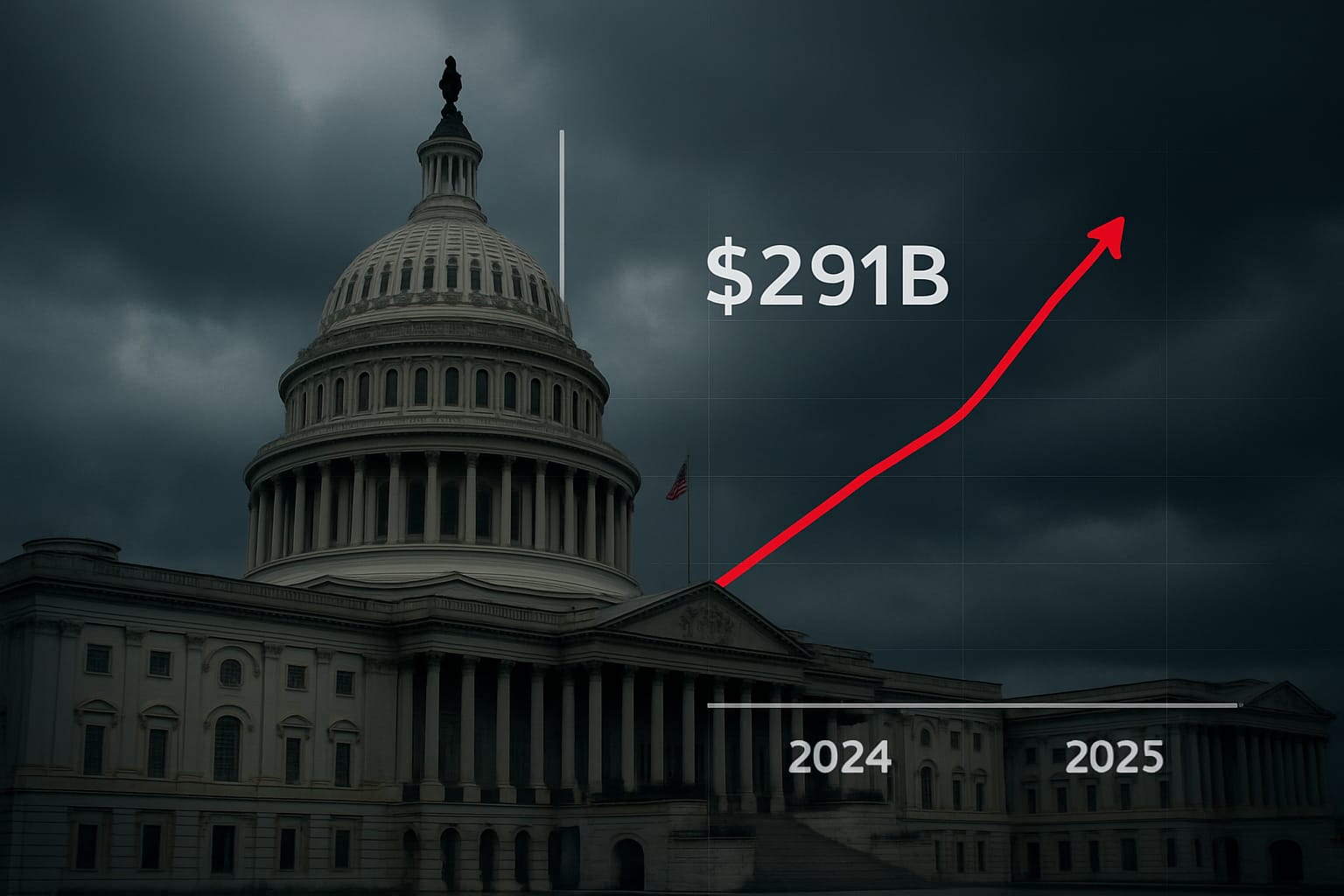
The U.S. federal deficit widened to $291 billion in July, a 19% year-on-year rise, despite tariff revenues tripling under Trump’s trade regime. Customs duties reached $21 billion, but were eclipsed by surging healthcare, Social Security, and debt service costs. With the year-to-date shortfall at $1.63 trillion, Washington faces a structural imbalance that tariff windfalls cannot offset. Fiscal sustainability now collides with strategic ambition, reshaping America’s capacity to fund defense, sustain alliances, and project power abroad.

Strategic Overview
The U.S. federal deficit widened sharply in July, reaching $291 billion, a 19% increase compared to the same month last year. While President Trump’s protectionist trade policies delivered record tariff revenues — nearly $21 billion for the month, more than triple last year’s level — the windfall was dwarfed by surging expenditures. Rising costs for healthcare, Social Security, and debt servicing continue to drive the imbalance, with interest payments alone exceeding $1 trillion annually. Year-to-date, the shortfall has climbed to $1.63 trillion, underscoring the structural nature of America’s fiscal pressures. Analysts warn that tariff gains, boosted by temporary backlogs, cannot offset the entrenched growth of entitlement programs and the burden of higher borrowing costs.
Operational Context
Revenue Side: Customs duties totaled $135.7 billion over ten months, a historic high. Yet July receipts of $338 billion were eclipsed by $630 billion in spending. Analysts warn that tariff surges tied to cleared backlogged imports are temporary, not sustainable.
Expenditure Pressures: Healthcare and pensions alone expanded by $249 billion this fiscal year. Debt servicing costs — now over $1 trillion annually — are rising under higher interest rates and elevated borrowing. Even adjusted for calendar quirks, the deficit trajectory points sharply upward.
Policy Signaling: President Trump frames tariffs as proof of his “America First” fiscal vision, moving to prohibit Central Bank transfers to Treasury and even criminalize deficit-creating budgets. But these moves are largely symbolic against the scale of entitlement-driven spending.
Geopolitical Tensions
Global Confidence: Persistent trillion-dollar deficits may erode international confidence in U.S. fiscal stewardship, with ripple effects on the dollar’s reserve status.
Trade Relations: Tariffs that bolster revenues simultaneously disrupt global supply chains, accelerating diversification away from U.S.-centric markets and feeding friction with key partners.
Narrative Politics: For Trump, tariff windfalls showcase strength. For critics, they mask structural weakness — with the deficit itself serving as a barometer of U.S. strategic capacity.
Strategic Outlook
Baseline: Tariffs provide tactical revenue but cannot alter the fundamentals: entitlement growth, debt servicing, and demographic pressures. The U.S. deficit is widening structurally.
What to Watch (next 2–4 weeks):
- Fiscal Year-End Reporting: Treasury data will clarify if tariff inflows hold once warehouse inventories are exhausted.
- Congressional Positioning: Any bipartisan talk of entitlement or debt reform in a polarized climate.
- Market Signals: Bond yields and foreign holdings of U.S. debt as leading indicators of investor confidence.
Implications
For the U.S.: Fiscal sustainability has become a strategic priority, as mounting debt service increasingly competes with defense, infrastructure, and foreign policy budgets. This constrains Washington’s ability to sustain its global posture over the long term.
For Allies: Expansive tariff regimes are reshaping trade flows, straining traditional partnerships and creating new vulnerabilities in supply-chain security that could alter transatlantic and Indo-Pacific economic balances.
For Rivals: In Beijing and Moscow, the visible pressure on U.S. fiscal capacity is interpreted as a looming constraint on Washington’s ability to project and sustain power abroad, encouraging them to test American resolve in contested regions.


