Syria’s Tartous Gamble: UAE’s $800 Million Bet on a Port in the Eye of the Storm
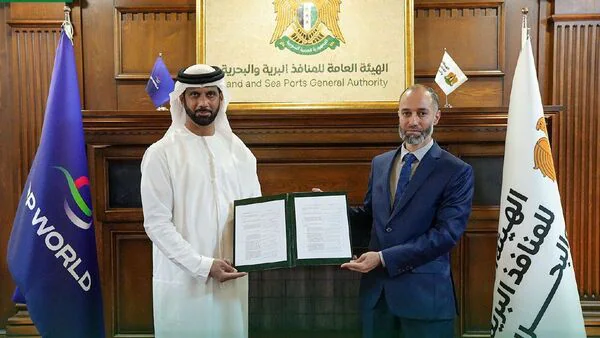
The $800 million UAE–Syria deal to redevelop Tartous port positions the site as a potential East Mediterranean logistics hub linking Asia, Europe, and Africa. Operated by DP World, the project could revitalise Syria’s economy and integrate it into regional trade. Yet deep instability, sanctions, and the port’s dual role as a Russian naval base complicate execution. Without security and political breakthroughs, Tartous risks becoming another unrealised infrastructure vision — rich in promise, poor in delivery.

Strategic Overview
The Syrian government has signed an $800 million agreement with UAE port operator DP World to redevelop and modernise the Tartous port — Syria’s only deep-water Mediterranean facility. The deal is being framed as an anchor for Syria’s post-war economic recovery and a potential transit hub connecting Asia, Europe, and Africa.
Yet the move sits at the intersection of unresolved conflict, entrenched foreign military presence, and volatile regional geopolitics. If implemented, the Tartous redevelopment could position Syria as a pivotal East Mediterranean logistics node. But given the country’s ongoing instability — from terrorist insurgencies to Israeli airstrikes — execution risks are extreme.
Historical & Strategic Context
Tartous has long been a strategic jewel. During the Cold War, it served as a Soviet naval logistics point. Since 2019, Russia has held a 49-year lease on part of the port, using it as its only permanent naval base in the Mediterranean. This Russian presence both secures Tartous militarily and complicates commercial expansion, as any redevelopment must coexist with naval operations.
Before the war, Tartous was Syria’s second-largest port after Latakia, handling significant grain, oil, and manufactured imports. However, a decade of conflict has degraded infrastructure, disrupted supply chains, and choked off foreign investment. For Damascus, the DP World deal is as much a geopolitical signal — that Syria is open for Gulf capital — as it is an economic project.
The UAE’s Calculated Outreach
The UAE has been steadily re-engaging Syria since 2018, reopening its embassy in Damascus and supporting Syria’s return to the Arab League in 2023. The Tartous deal is an extension of that policy — a wager that economic integration can gradually draw Syria out of its isolation, counterbalance Iranian dominance, and offer Abu Dhabi leverage in Levantine affairs.
For DP World, the calculus is more commercial. The East Mediterranean shipping lanes are poised for growth as European supply chains diversify away from Asia-exclusive sourcing. Tartous offers a potential bypass to congested Suez traffic and an entry point into Iraq’s growing market — provided Syria stabilises.
Operational Vision
Under the agreement, DP World would modernise cargo terminals, deepen berths to handle larger vessels, and introduce digital logistics platforms. Plans reportedly include a free-trade zone adjacent to the port, targeting re-export industries and value-added processing.
In a stable environment, such an upgrade could transform Tartous into a competitive regional player alongside:
- Tripoli, Lebanon — expanding with Gulf and Chinese financing.
- Haifa, Israel — now partially operated by India’s Adani Ports.
- Port Said, Egypt — Suez Canal’s Mediterranean gateway.
But unlike these competitors, Tartous is ringed by instability. Israel routinely strikes Iranian and Hezbollah assets in Syria, sometimes near the coast. In the interior, ISIS remnants and other insurgents disrupt transport routes. Western sanctions remain a major barrier to financing and insurance for shipping lines.
Geopolitical Complications
The Russian lease on part of Tartous introduces an unusual cohabitation model — a commercial terminal under Emirati management alongside a foreign military base. While Moscow’s presence offers a security shield against some threats, it also entrenches Syria in a geopolitical axis that complicates Western engagement.
Furthermore, Israel views any Gulf investment in Syrian infrastructure with suspicion, concerned it could indirectly benefit Iranian-aligned actors. The U.S. Caesar Act sanctions, designed to deter foreign investment in Assad-controlled Syria, create additional risk for DP World and its financing partners. Abu Dhabi’s confidence suggests either that it expects a loosening of sanctions in the medium term or that it is willing to absorb the political cost for strategic positioning.
Economic & Regional Integration Potential
If realised, Tartous could serve as:
- A Mediterranean outlet for Iraqi goods, linking via road and potentially rail to the Basra–Grand Faw projects.
- A node in East Mediterranean energy exports, particularly if offshore gas finds are linked to new liquefied natural gas (LNG) facilities.
- A Belt and Road corridor component, connecting Chinese overland and maritime routes through the Levant into European markets.
However, these visions hinge on resolving Syria’s fragmented sovereignty, repairing critical inland infrastructure, and ensuring secure trade corridors — none of which appear imminent.
Scenario Forecasts
Best-Case (Long-Term)
The UAE leverages its diplomatic ties to mediate limited de-escalations, sanctions are gradually eased, and Tartous emerges within a decade as a mid-tier regional logistics hub, servicing Levantine and Iraqi markets.
Moderate-Case
Partial infrastructure upgrades proceed, but instability and sanctions prevent full utilisation. Tartous becomes a niche port, handling selective cargo under bilateral arrangements but failing to compete with regional giants.
Worst-Case
Security incidents, political reversals, or intensified sanctions stall the project entirely. DP World scales back or withdraws, and Tartous remains a militarised, underutilised facility.
Strategic Outlook
The Tartous deal is less about cranes and container yards than it is about the politics of re-entry — Syria’s gradual attempt to claw back relevance in regional economic flows. The UAE’s involvement reflects a broader Gulf shift toward pragmatic engagement with contested states, betting on influence through infrastructure.
Yet infrastructure alone cannot stabilise a country still fractured by sectarian fault lines and external interventions. For Tartous to become a viable hub, Damascus will need more than Emirati capital: it will require a durable security settlement, coordinated maritime governance, and integration into broader Mediterranean trade frameworks.
Failure to achieve these conditions risks turning Tartous into another unrealised port dream — a cautionary tale of infrastructure ambitions outpacing political realities.