HSBC Raises Alarm Over Trade War Impact: What It Means for Emerging Markets and Global Stability
When a global financial institution like HSBC increases its bad debt provisions, it means the bank anticipates more customers—individuals, companies, or even governments—will default on their loans. The bank is effectively saying, "We expect tougher times ahead." This isn’t guesswork. It's a move based on internal data, macroeconomic trends, and predictive modeling.

In its first-quarter financial report for 2025, HSBC—the world’s seventh-largest bank by assets—made headlines by increasing its bad debt provisions by a substantial $200 million, bringing the total to $900 million. This precautionary move, driven by escalating trade tensions and rising geopolitical instability, led to a 25% reduction in the bank’s quarterly profits. At first glance, this might seem like a simple line item on a balance sheet. But dig deeper, and it reveals profound implications for emerging markets, global investment flows, and financial stability worldwide.
Reading Between the Lines: What HSBC’s Decision Signals
When a global financial institution like HSBC increases its bad debt provisions, it means the bank anticipates more customers—individuals, companies, or even governments—will default on their loans. The bank is effectively saying, “We expect tougher times ahead.” This isn’t guesswork. It’s a move based on internal data, macroeconomic trends, and predictive modeling.
A $900 million provision is not just a cushion; it’s a warning flare. HSBC is adjusting its risk posture, and in doing so, it’s signaling that the global financial climate is becoming more volatile. The causes? Trade war tremors, especially between the U.S. and China, disruptions in global supply chains, sanctions, protectionist policies, and political fragmentation. All of these combine to create a more fragile and unpredictable economic environment.
Why Emerging Markets Should Pay Close Attention
Emerging markets are particularly vulnerable in such scenarios. Here’s why:
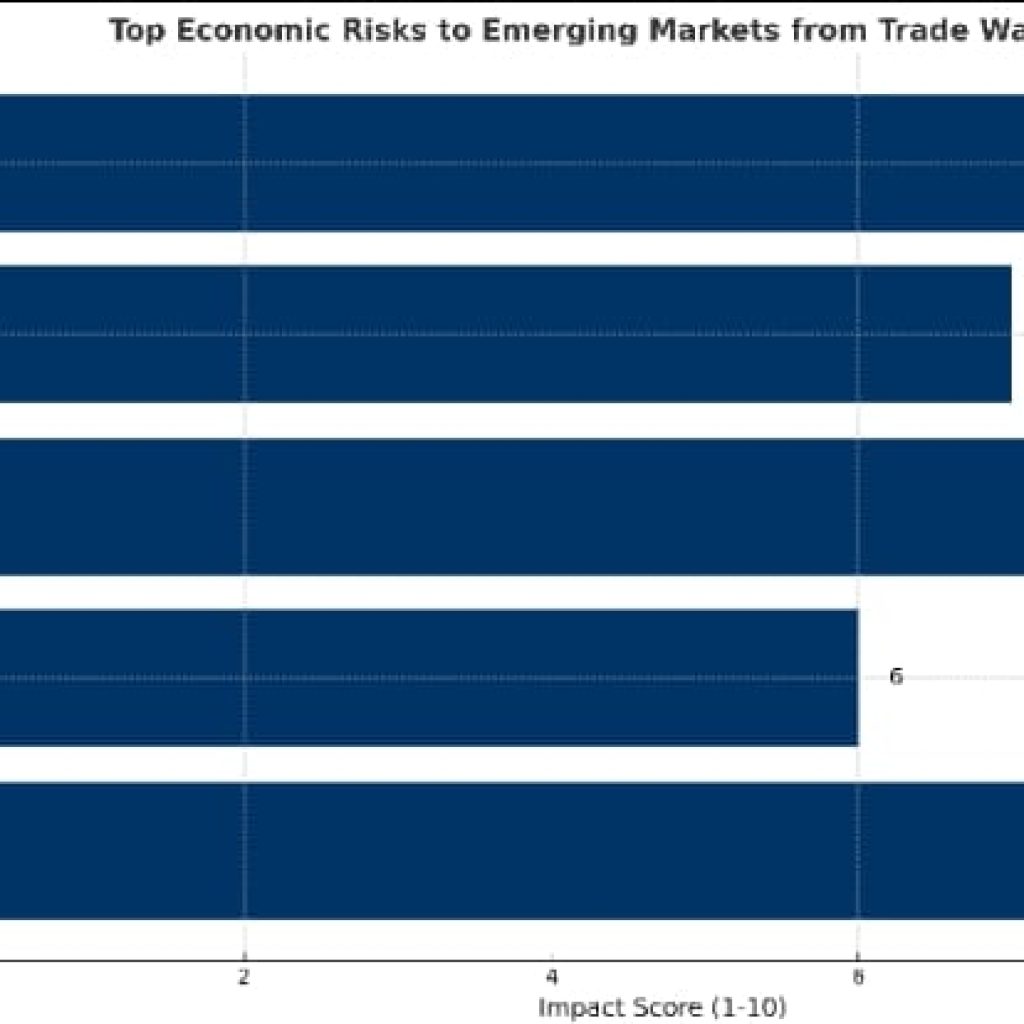
1. Capital Flight Risk: When global banks prepare for instability, they often reduce exposure to riskier markets. HSBC tightening its provisions could lead to stricter lending standards, especially in developing countries where perceived risks are higher. As a result, investment may slow or even reverse, leading to capital flight.
2. Currency Volatility: With reduced investor confidence, local currencies may depreciate, increasing the cost of imports and driving inflation. Countries with high external debt denominated in dollars or euros will find repayments more expensive.
3. Credit Squeeze: Local businesses in emerging markets rely heavily on international credit lines to operate and expand. If institutions like HSBC start pulling back, it will be harder for firms to access financing, stalling economic growth.
4. Supply Chain Exposure: Many emerging markets serve as manufacturing hubs or commodity suppliers. Trade wars disrupt supply chains, causing demand fluctuations that impact exports and national revenues.
5. Sovereign Debt Pressures: Some emerging economies are already on shaky fiscal ground. With rising global interest rates and less access to credit, these governments may face increased difficulty refinancing debt or funding social programs.
Case in Point: Southeast Asia and Africa
In Southeast Asia, nations like Vietnam and Malaysia have thrived on global supply chains. But as companies reassess their dependencies, the region risks losing its growth momentum. Similarly, Africa has become increasingly dependent on Chinese trade and investment. Trade war tensions between China and the West could indirectly destabilize African economies, especially those with large infrastructure debts tied to Chinese loans.
Nigeria, for instance, has over $5 billion in loans from Chinese financial institutions. Should Beijing recalibrate its overseas commitments due to mounting pressure from trade disputes, projects in Nigeria, Kenya, and Ethiopia may face delays or cancellation.
Private Sector: The Squeeze is Real
For entrepreneurs and private businesses in emerging markets, the ripple effects can be brutal. As international credit contracts, startups and small businesses suffer first. This limits innovation and job creation. Multinational companies may also delay expansions or withdraw altogether, compounding the domestic slowdown.
Moreover, rising insurance premiums for political risk coverage—often a prerequisite for foreign direct investment in unstable regions—can make projects financially unviable.
A Domino Effect on Global Trade
Trade wars don’t end in the headlines. They echo in boardrooms and banking halls. As HSBC’s move suggests, the consequences of prolonged economic nationalism and retaliatory tariffs are now reaching the core of global finance.
Increased provisioning by one bank may seem minor, but if it becomes a trend—as it did during the 2008 financial crisis—the cumulative effect can be seismic. Other major banks may follow HSBC’s lead, tightening credit globally. International trade could shrink. Business confidence could erode.
We are already seeing a shift: shipping volumes through major ports like Shanghai, Singapore, and Rotterdam have declined in early 2025. The Baltic Dry Index—a key measure of global shipping demand—is down 18% year-to-date. These are early tremors.
Recalibrating Development Strategy in the Global South
Emerging market leaders must respond strategically. First, diversification is essential. Overreliance on a single trading partner or sector (e.g., oil, mining, textiles) is a vulnerability. Countries should accelerate efforts to broaden their economic base, attract diversified investment, and build domestic industrial capacity.
Second, strengthening domestic capital markets can reduce dependence on volatile international flows. Encouraging local savings and building robust regulatory frameworks can make countries more resilient.
Third, there is a leadership opportunity. The Global South can advocate for more balanced global economic governance. Regional trade blocs like the African Continental Free Trade Area (AfCFTA) and ASEAN can insulate members from external shocks.
Potential Challenges and Critiques
Of course, there are no simple fixes. Critics will rightly point out that diversification takes time, and local capital markets often lack the depth to absorb large-scale shifts. There is also the danger that overly protectionist responses in emerging markets could mirror the trade war dynamics that sparked the problem in the first place.
Moreover, social and political unrest could follow prolonged economic pain. Unemployment, inflation, and reduced public services can ignite instability, especially in countries already grappling with governance issues.
Ethically, some may question whether global banks are acting prudently or simply accelerating decline in vulnerable regions by pulling back prematurely. There’s a case to be made for more responsible finance—where institutions balance risk management with long-term commitment to sustainable development.
A Call to Action: From Alarm to Strategy
HSBC’s report is not just a warning—it’s a moment to rethink. Trade wars and geopolitical tensions are not disappearing soon. But neither should the hope for stability and growth in emerging markets.
Governments, businesses, and development institutions must collaborate more closely than ever. Scenario planning, strategic reserves, investment in infrastructure, and public-private partnerships can create buffers. Tech and innovation ecosystems must be nurtured. Human capital development should be prioritized to future-proof labor markets.
This is not a time to retreat. It is a time to double down on building resilience. Emerging markets, with their young populations, untapped resources, and entrepreneurial energy, can still lead the next wave of global growth—but only if they read the signs and act decisively.
Dr Brian O. Reuben is the Executive Chairman of the Sixteenth Council