
From Restraint to Retaliation: India’s Strategic Suspension of the Indus Waters Treaty
The treaty’s complex dispute-resolution mechanism precipitated several challenges for India’s hydropower projects, such as the Kishenganga and Ratle plants located on the Jhelum and Chenab rivers respectively. The Treaty’s annexure D permits India to only build run-of-river hydroelectric plants on the Indus water system’s Wester Rivers.

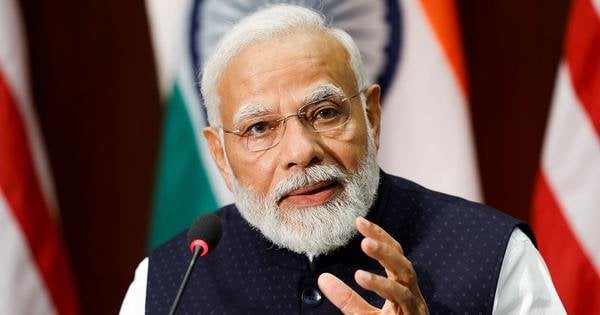
“Blood and water cannot flow at the same time” said Indian Prime Minister Narendra Modi in the aftermath of the Uri attack of 2016 that claimed the lives of 18 Indian soldiers. His words reflected India’s growing unease with the World-Bank
brokered Indus Waters Treaty signed with Pakistan in 1960. India has now acted on that forewarning, placing the treaty in abeyance following the horrific terror attack in Pahalgam, a popular tourist hill station in Kashmir, on 22nd April, which left 26 dead and 17 injured. The decades-old agreement, once seemingly insulated from the bitter diplomatic ties between New Delhi and Islamabad, is at least temporarily suspended, releasing India from its asymmetrical obligations and disadvantages. The treaty was a water-sharing agreement distributing the water of the Indus River and its tributaries between the two countries. Articles 2 and 3 split the Indus River System into three eastern rivers, including the Beas, Ravi and Sutlej, and three western rivers, including Indus, Chenab and Jhelum. The agreement is misleadingly equitable, allocating the three eastern rivers to India and the three western rivers to Pakistan. The rivers allocated to India are significantly lower in total water volume, with a mean annual flow of 41 billion cubic meters, compared to the ones in Pakistan’s share with an annual flow of 99 billion cubic meters. Thus, India only gets to control 30% of the Indus River system’s water despite being the upstream state, limiting its strategic advantage over Pakistan. Moreover, India could only use the Western rivers for domestic and non-consumptive use, with significant restrictions placed on its use for agriculture or hydro-power generation.
Pakistan’s Politicization and Weaponization of Dispute-Resolution Mechanisms
The treaty’s complex dispute-resolution mechanism precipitated several challenges for India’s hydropower projects, such as the Kishenganga and Ratle plants located on the Jhelum and Chenab rivers respectively. The Treaty’s annexure D permits India to only build run-of-river hydroelectric plants on the Indus water system’s Wester Rivers. These plants feature little to no water storage facility, limiting their year-round use by making them vulnerable to seasonal river flows and rendering them as mere intermittent energy sources. The treaty provides Pakistan the right to object to any of India’s hydropower projects, which it often weaponizes to stall and delay Indian plant constructions, even when they comply with treaty obligations. Aside from the relatively recent Kishenganga and Ratle projects, Pakistan also raised objections to the construction of the Baglihar Dam on the Chenab river in 2005, leading to the appointment of a neutral expert per the agreement’s dispute-resolution mechanism who ultimately ruled in India’s favor in 2007. Pakistan’s use of the treaty’s arbitration instruments to its political ends has led to multiple project delays and cost overruns for India’s hydropower projects on the Indus River system. The abeyance of the treaty will enable India to break free from these shackles and capitalize on its natural resource endowments to bolster its energy security, particularly in the country’s strategically important northern regions.
Water: A Driver of Pakistan’s Illegal Quest for Kashmir
Pakistan’s repeated attempts to spread terror and instability in Kashmir through its state-sponsored network of extremist groups are often correlated to its efforts to expand its influence in one of India’s muslim-majority areas. While this is certainly true, it must not be viewed as the sole driver of Islamabad’s terror agenda in the region. Unlike India, Pakistan is reliant on the Indus River system for its entire agricultural production. Originating in Tibet, the Indus River and its tributaries cut across Jammu and Kashmir before entering Pakistan and traveling down its entire length towards the Arabian Sea. Hence, Pakistan views Kashmir as a strategically important region to secure uninterrupted access to water, particularly given its water-intensive economy where 97% of its total water is used for irrigation. Thus, the termination of the Indus Waters Treaty poses a serious threat to Pakistan’s agrarian economy, with food exports accounting for approximately 16% of its total exports in 2023.
Simultaneously, Pakistan’s weak water security can provide India with significant leverage during conflict between the two countries. The termination of the treaty will allow New Delhi to store and divert water away from Pakistan’s Punjab and Sindh provinces, the country’s agricultural epicenters. While India has historically refrained from tampering with Pakistan’s water flows, Islamabad’s continued state-sponsorship of extremists in the region warrants unorthodox approaches, especially after 22nd April’s attack on tourists in the Kashmir valley. India’s Foreign Secretary Vikram Misri emphasized that the treaty would be “held in abeyance until Pakistan credibly and irrevocably abjures its support for cross-border terrorism”. In such contexts, control over a country’s water supply may be turned into what the French would call ‘ruse de guerre’, a clever strategy employed during warfare to gain an advantage over adversaries.
The Geopolitics of India’s Response to the Pahalgam Attack
India’s response to Pakistan’s most recent transgression has largely been diplomatic, with the abeyance of the Indus Waters Treaty being one of the announced measures. While these will almost certainly be supplemented by a kinetic response in the near future, India currently finds itself in a challenging geopolitical environment. As Pakistan’s economic challenges entrench its position as China’s client state, Beijing and New Delhi have been involved in their own border tensions since 2020, although attempts to deescalate are underway. Hence, China is more than likely to throw its diplomatic weight behind Pakistan, forcing India to manage hostilities on two fronts. Furthermore, China has been expanding its influence in Bangladesh, recently announcing investments worth $2.1 billion in the country, adding to India’s potential security risks. Simultaneously, it can be argued that the Indian defense establishment’s preoccupation with China and relative quiet along the border with Pakistan since the Balakot air strike in 2019 compounded to create significant moral hazards in New Delhi’s security infrastructure, exacerbating blind spots that led to the Pahalgam attack.
On the other hand, India may be well positioned to capitalize on its close relationship with the United States under Trump 2.0, particularly given that 22nd April’s attack coincided with Vice President J.D Vance’s visit to the country. Moreover, the second Trump administration’s transactional approach to foreign relations leaves Pakistan with little to offer to Washington, despite it’s war-on-terror era ties with the United States. Instead, it may have distanced itself from the West by aligning closely with China. Further, India’s relationship with Europe and the United Kingdom remains strong, particularly as Brussels and London seek to expedite their FTA negotiations with New Delhi as part of their economic recalibration strategies. However, an escalation with Pakistan may compromise recent strides in India’s strengthening relations with countries in the Gulf Cooperation Council, a crucial partnership for the country’s fast-growing economy. Despite this small but present risk, India is in a much better position to tackle Pakistan’s state-sponsored terror campaign today due to its strengthening defense capabilities and robust foreign relations where it has advocated for a zero-tolerance policy against terrorism in every forum.
Conclusion and Way Forward
The abeyance of the Indus Waters Treaty marks a decisive shift in India’s approach towards a long-standing asymmetry with Pakistan that has favored Islamabad both in water allocation and diplomatic maneuvering. India’s abeyance of the treaty emerges as more than a symbolic gesture in response to the Pahalgam attack. it is a calculated geopolitical response rooted in national security, strategic resource control, and the long-overdue rebalancing of obligations. The treaty’s structural inequities and Pakistan’s politicized use of its dispute-resolution mechanisms have consistently undermined India’s developmental and energy goals, particularly in the country’s strategically important northern regions. More critically, the termination of the treaty and a host of other diplomatic measures serve as an optimal initial response to 22nd April’s attack while kinetic options are weighed. While the upcoming escalation may complicate India’s diplomatic engagements in the short term, especially with China and certain Gulf states, it simultaneously strengthens its strategic posture and capitalizes on its growing global partnerships. In a new era of asymmetric threats and hybrid warfare, controlling natural resources, maintaining energy security, and defending borders have become critical to preserving India’s sovereignty. India’s message is clear: peace and terror cannot flow together, just as blood and water cannot.
Ishan Jasuja is a Research Fellow at the Asia Program of the Sixteenth Council
Critical Minerals and the Green Transition: Europe’s New Dependency Risk