Fortress America Returns: What Allies Must Understand About Trump’s Signature Domestic Policy Push
As President Trump’s second term advances, his signature domestic agenda, the America First Reindustrialization Act, signals a sweeping shift in U.S. economic and strategic policy. Blending nationalism, industrial revival, and security, the act redefines global alliances, challenges trade norms, and aims for economic disentanglement from China. For allies, understanding and adapting to this new U.S. posture is not optional, it’s imperative for navigating a more transactional and strategically assertive America.

As President Donald Trump’s second term gains momentum, his administration is shaping what is widely seen as the cornerstone of its domestic agenda: a sweeping legislative package informally referred to in Washington as the America First Reindustrialization Act. Though still winding its way through Congressional negotiation, the contours of this bill are already evident—and so are the geopolitical consequences. This is not simply a matter of domestic economic policy. It is a structural redirection of America’s internal engine, with strategic shockwaves likely to be felt from Brussels to Beijing, from Ottawa to Osaka.
For allies, partners, and adversaries alike, understanding the motivations, mechanics, and global implications of this bill is not optional. It is essential to strategic planning.
The Core Vision: Reindustrialization Meets Nationalism
The central thesis of the bill is simple yet far-reaching: America must make things again, and it must do so for Americans first.
The policy is a blend of old-school industrial policy, Trump-era nationalism, and security-oriented economic thinking. In Trump’s view, the decline of U.S. manufacturing is not just a loss of jobs—it is a national security threat. Accordingly, the legislation prioritizes:
- Massive subsidies and tax breaks for domestic manufacturing, particularly in semiconductors, critical minerals, pharmaceuticals, and defense technologies.
- Aggressive rollbacks of environmental regulations to unleash fossil fuel production, justified as both economic and strategic imperatives.
- Strict immigration curbs intended to “secure the American labor market.”
- Provisions to penalize offshoring and discourage dependency on foreign supply chains—especially Chinese ones.
- A government-mandated audit of foreign corporate influence in strategic sectors, from energy grids to communications.
This is not incremental tinkering. It is structural realignment—onshoring as doctrine, not suggestion.
Why Allies Should Pay Attention
While the policy may look inward, its consequences are anything but domestic. Three major global effects are worth underscoring.
1. The Death (or Rebirth?) of Global Supply Chain Orthodoxy
For the better part of three decades, U.S. allies in Europe and Asia aligned their industrial strategies with the assumption that America would remain committed to global supply chains and open markets. That assumption is now under siege.
If passed in its current form, Trump’s legislation would:
- Disincentivize imports, even from close allies.
- Accelerate “friend-shoring” but only as a second-best option—with full domestic production taking top priority.
- Trigger retaliatory trade adjustments, especially in sensitive sectors like autos, aerospace, and medical supplies.
For European manufacturers, Canadian energy producers, and Asian tech suppliers, the writing is on the wall: proximity to the U.S. market no longer guarantees preferential access unless domestic U.S. capabilities are absent or politically shielded.
Allies must respond not with nostalgia but with strategic recalibration. Coordinated investment strategies, dual-track manufacturing footprints, and resilience-based trade coalitions may emerge as necessary countermeasures.
2. Security Ties Will Come with Industrial Expectations
Under the Trump doctrine, alliances are no longer free. They are not just security arrangements—they are economic alignments. And loyalty, in this view, must be proven in the marketplace as well as on the battlefield.
We can already see indications of this shift in the White House’s rhetoric:
- NATO members may be pressured to buy American defense goods as proof of alignment.
- Countries hosting U.S. bases could be asked to prioritize American suppliers in key infrastructure projects.
- Trade deals, such as the USMCA or bilateral agreements with the UK and Japan, may face revisionist pressures if they are perceived to disadvantage U.S. producers.
The message to allies is blunt: security and industrial solidarity are now one and the same.
For countries like Germany, South Korea, or Canada—highly dependent on the U.S. both militarily and economically—this blending of defense and economics presents a new strategic calculus. Dependence on American markets and protection now carries new costs and expectations.
3. China Is the Unspoken Constant
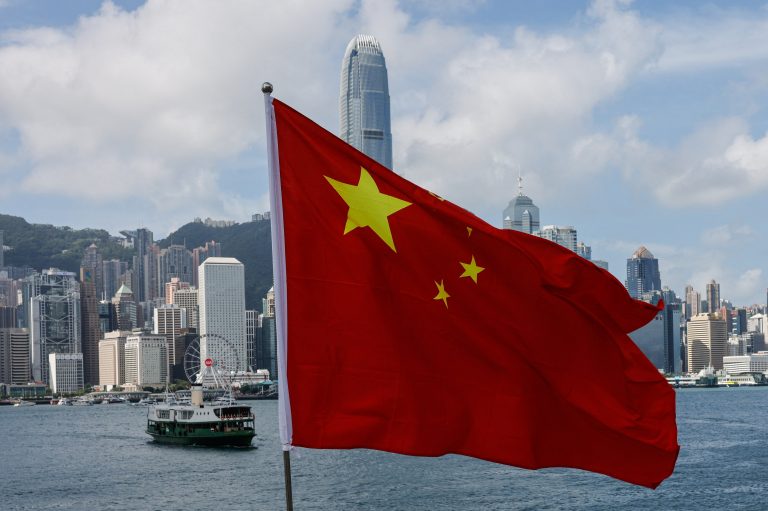
Although the bill makes no direct mention of China, the entire framework is built with Beijing in mind. The aim is not just American reindustrialization but American disentanglement from China—in supply chains, technology flows, and capital markets.
Expect new legislative appendices and executive orders targeting:
- Chinese investment in U.S. critical infrastructure.
- Dual-use technology exports to Chinese firms.
- Influence campaigns embedded in academic or technological exchange.
This is Cold War-level economic bifurcation, dressed in modern policy language. Allies who remain integrated with Chinese markets will soon find themselves under pressure to “choose.” If not formally, then through informal pressure points: defense contracting, intelligence-sharing, investment clearance.
For nations hedging between Washington and Beijing, this bill will sharpen the blade of strategic ambivalence.
Implications for Global Governance and Institutions
There are deeper systemic consequences as well. If the U.S.—the traditional steward of post-war economic liberalism—formally reorients toward economic nationalism, then the ideological foundation of the WTO, IMF, and OECD will erode further. Trump’s team views global economic institutions with deep skepticism, often accusing them of undermining American sovereignty.
Already, the proposed policy includes clauses aimed at:
- Limiting U.S. compliance with multilateral environmental or trade arbitration rulings.
- Requiring congressional oversight for U.S. contributions to global development banks.
- Rewriting procurement rules for multilateral defense projects to favor U.S.-made equipment.
In essence, the U.S. is preparing for selective multilateralism, where cooperation exists only when it aligns with strategic domestic goals.
Final Thoughts: What Allies Must Do Now
The temptation in foreign capitals will be to wait this out, to hedge until the next U.S. election cycle, or to make small concessions while preserving old assumptions. That would be a mistake.
This bill signals something deeper than Trump—it reflects a bipartisan undercurrent of American economic retrenchment, growing distrust of globalization, and a national security apparatus increasingly driven by industrial resilience.
For allies, the playbook must now include:
- Preemptive bilateral engagement to ensure exemptions or carve-outs.
- Independent supply chain resilience strategies that align without depending.
- A reimagining of what “alignment” with Washington truly means in a multipolar, transactional world.
America is building economic walls—not to shut the world out, but to better control how and when the gates open. For allies, the path forward lies not in protesting the new fortress—but in learning how to partner with it, shape it, and, when needed, challenge it.
Dr Brian O Reuben is the Executive Chairman of the Sixteenth Council