Donald Trump’s Tariff Impacts on Private Markets: A Deep-Dive Analysis of Economic Sovereignty, Global Trade, and American Industry Decline

Tariffs, once considered a relic of protectionist pasts, returned with brute force under President Donald J. Trump. With the rise of “America First,” a slogan that evolved into a full-fledged economic doctrine, Trump redrew the lines of international trade. His administration imposed sweeping tariffs on billions of dollars’ worth of Chinese goods and others—fueling what became known as the “U.S.-China Trade War.” These tariffs were not only a confrontation of numbers, but a clash of ideologies: sovereignty versus interdependence, industrial rebirth versus globalisation.
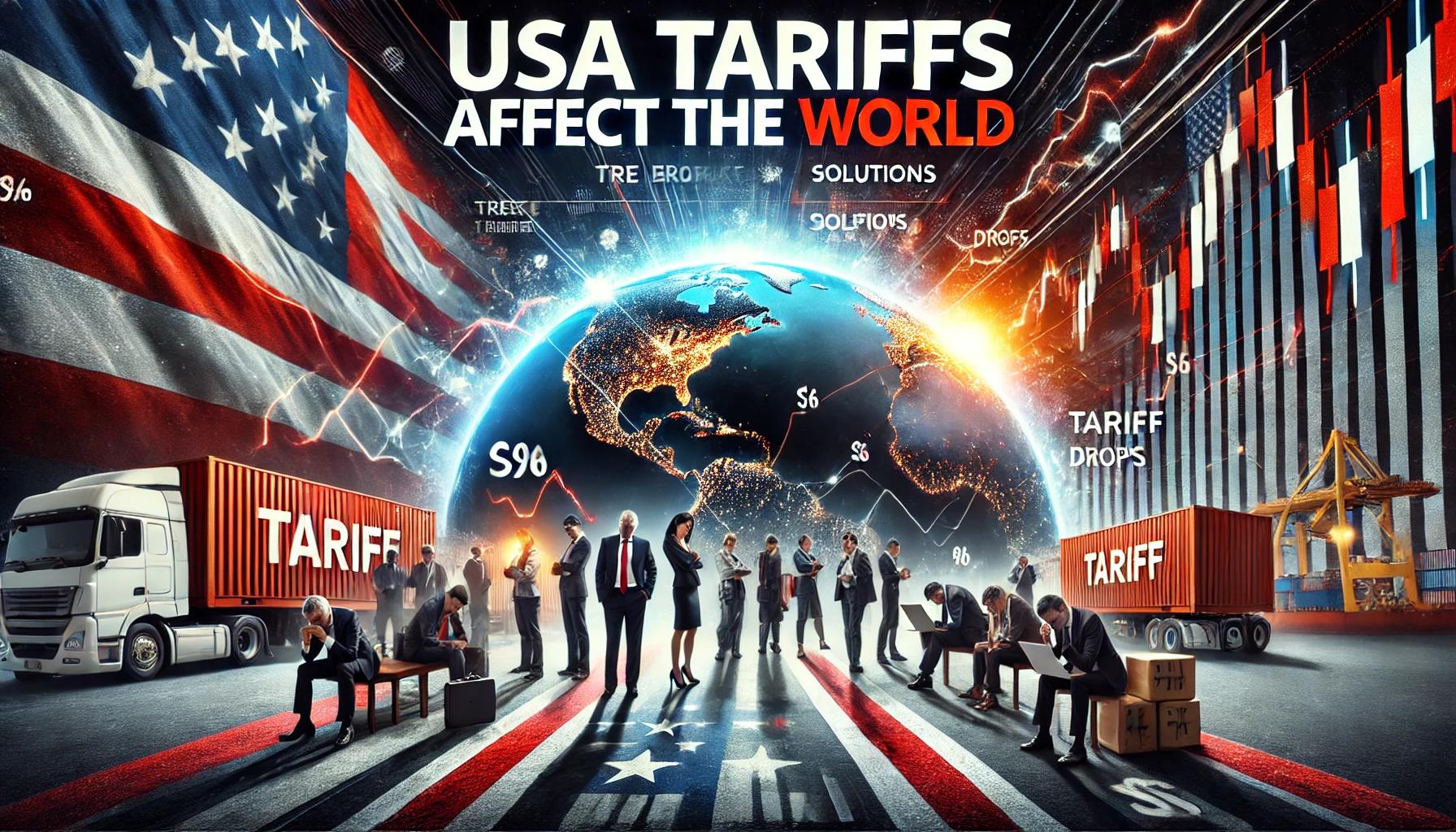
But what were the real impacts? Did tariffs really protect American jobs and industries, or did they backfire—raising costs, shaking markets, and disrupting global supply chains? This report unpacks the mechanics, outcomes, and deeper implications of Trump’s tariffs, while challenging readers to reconsider the meaning of economic independence in a multipolar world.
What Are Tariffs, How Do They Work, and Who Pays Them?
A tariff is a tax imposed by a government on imported goods. Its primary objective is to make foreign goods more expensive than domestically produced ones, thereby protecting homegrown industries. The logic: if foreign goods are more expensive, consumers will favour local alternatives, stimulating national production and preserving jobs.
How Tariffs Work:
1. A country places a tax on specific imported goods.
2. The importing company pays the tariff at the border.
3. That cost is often passed on to consumers or manufacturers downstream.
Who Pays for the Tariffs?
Despite popular rhetoric, tariffs are not paid by the exporting country. Instead, they are paid by the importing companies and, eventually, by domestic consumers and businesses.
Case Study – Trump’s Tariffs on China:
• In 2018, the U.S. imposed tariffs on over $360 billion worth of Chinese goods.
• Fact: According to a 2019 report by the Federal Reserve Bank of New York, U.S. consumers bore nearly the entire cost of the tariffs. Prices on taxed goods rose by roughly the full amount of the tariff.
• Example: A 25% tariff on Chinese washing machines resulted in an average retail price increase of $86 per unit in the U.S. (Source: Peterson Institute for International Economics).
Imports, Job Losses, and the Shift of Industrial Power
Globalisation transformed the world—but not always in America’s favour. While consumers enjoyed cheaper products, the domestic industrial base—especially in manufacturing—was hollowed out.
A. Evidence of Job Losses in the U.S.
The Economic Policy Institute (EPI) estimates the U.S. lost 3.7 million jobs to China between 2001 (when China joined the WTO) and 2018. Nearly 2.8 million of those jobs were in manufacturing.
B. Industries Affected:
1. Electronics and Machinery: Once the pride of American factories, these sectors now heavily rely on Chinese imports.
• In 2022, the U.S. imported $166 billion in computers and electronics from China (U.S. Census Bureau).
2. Apparel and Footwear: Over 90% of U.S. shoes and clothes are imported, mostly from Asia.
3. Steel and Aluminium: Despite protective tariffs, imports continued due to high domestic costs.
C. Where Are the Jobs Now?
Manufacturing jobs have exploded in:
• China (world’s largest manufacturer, $4.9 trillion output in 2023)
• Vietnam and Bangladesh (garment industry boom)
• Mexico (auto parts, electronics)These nations offer cheap labour, fewer regulations, and investor-friendly zones—conditions that outcompete American unions and standards.
D. Historical Comparison – Job Market Decline
• In 1979, U.S. manufacturing jobs peaked at 19.5 million.
• By 2019, before COVID-19, the number was just 12.8 million, despite population growth (Bureau of Labor Statistics).
• Imports of goods and services reached $3.38 trillion in 2022, up from $1.1 trillion in 2000 (World Bank).
The U.S.-China Trade War: Trade Deficits and Strategic Conflict
A. Understanding the Trade Deficit
• A trade deficit occurs when a country imports more than it exports.
• In 2018, the U.S. trade deficit with China peaked at $418 billion.
B. Trump’s Policy Interventions
1. Section 301 Tariffs: Targeted unfair trade practices by China (e.g., IP theft, tech transfer).
2. Steel & Aluminium Tariffs (Section 232): Justified on national security grounds.
3. USMCA Agreement: Replaced NAFTA to include stricter rules of origin.
4. Phase One Deal (2020): China pledged to buy $200 billion more in U.S. goods over two years—but fell short by 57%, according to the Peterson Institute.
C. Did Tariffs Work?
• The trade deficit with China decreased slightly in 2019 but rebounded in 2021.
• Manufacturing jobs saw a brief uptick (around 500,000), but gains were erased by rising input costs and COVID-19 disruptions.
• American farmers suffered: retaliatory tariffs cost soybean farmers $10.9 billion in lost exports (USDA).
Global Reverberations: The Ripple Effect on Private Markets
Tariffs reshaped private markets worldwide:
• Global Supply Chain Disruptions: Companies like Apple and General Motors had to redesign sourcing strategies.
• Foreign Direct Investment (FDI) to China slowed by 10% in 2019.
• Southeast Asia benefited as firms relocated factories to Vietnam and Malaysia to avoid tariffs.
• European Union companies were caught in the crossfire—especially those relying on transatlantic or transpacific components.
Fact: The IMF projected in 2019 that U.S.-China tariffs would reduce global GDP by 0.8% by 2020.
Economic Sovereignty: The Heart of the Debate
Every nation has a right to protect its economy. Yet protection must not morph into isolationism or economic warfare.
A. Defining Economic Sovereignty
True sovereignty is the capacity to withstand external shocks without economic collapse. It requires:
• Industrial capacity
• Energy independence
• Strong internal markets
• Regional trade networks
Trump’s “America First” echoed this philosophy. Yet critics argue it lacked a coherent long-term industrialisation strategy. Without innovation and investment in new industries, tariffs became a bandage—not a cure.
B. Lessons from History
• Japan post-WWII built its economy by mastering high-value manufacturing.
• South Korea’s economic rise was built on protectionist policies but transitioned into global competitiveness.
C. America Must Build ResilienceThe U.S. must:
1. Invest in industrial retooling
2. Incentivise domestic production of critical goods (e.g., semiconductors)
3. Create regional trade alliances like the African Continental Free Trade Area (AfCFTA) or expand USMCA reach
Current U.S. Trade Policies (As of 2024)
1. Section 301 Tariffs – Still active against China.
2. Steel and Aluminium Tariffs – Imposed globally, softened for allies.
3. USMCA – Encourages North American supply chains.
4. Buy American Act – Federal preference for U.S.-made products.
5. Inflation Reduction Act – Incentives for domestic green energy production.
New Policy Recommendations for Fair Global Trade
1. Multilateral Tariff Agreement: Create a WTO-led framework limiting retaliatory tariffs and encouraging gradual phase-outs.
2. Digital Trade Protocols: Set rules for e-commerce and data flows to prevent digital protectionism.
3. Global Labour Standards Pact: Prevent job arbitrage by enforcing minimum wages, safety, and benefits in international trade.
4. “Made in Region” Incentives: Encourage trade blocs (e.g., USMCA, ASEAN) to build internal value chains.
5. Investment in AI, robotics, and quantum computing: Shield economies from labour-intensive outsourcing by becoming tech sovereigns.
Conclusion: Reclaiming Economic Destiny
President Trump’s tariffs marked a turning point—a statement that the era of unchecked globalisation had costs too great to bear. While the immediate results were mixed, the fundamental message was clear: sovereignty matters.
For too long, nations surrendered their economic destinies to multinationals, foreign subsidies, and distant decisions. America paid the price in shuttered factories and broken towns. But this isn’t just America’s story—it’s a global warning.The world must rewrite trade rules with equity, dignity, and strength. Nations must industrialise, regionalise, and strategise. Tariffs alone are not salvation. Real change comes when leaders build economies that cannot be dictated to—but define their own future.
Let the tariff wars not divide us further but awaken us to the deeper truth: A sovereign economy is not isolationist; it is resilient, innovative, and unbreakable.
Aric Jabari is the Editorial Director at the Sixteenth Council