
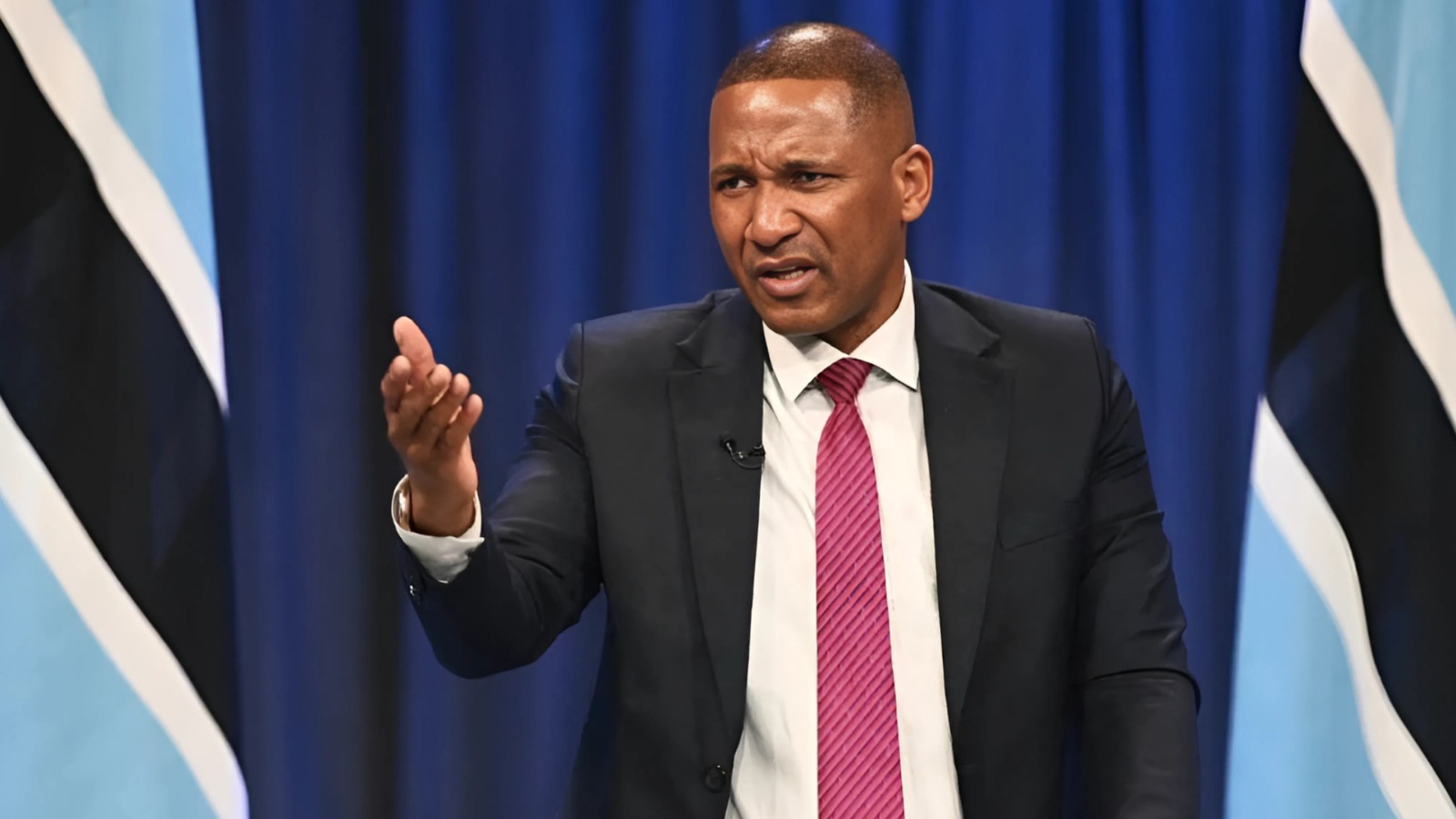
Botswana’s President Unleashes Fury: Ministers Exposed for Fatal Incompetence
President Duma Boko delivered a fiery address condemning systemic failures in Botswana’s governance, education, energy, and procurement sectors. Highlighting the paradox of vast mineral wealth amid economic underperformance, he called for radical reform, including digitalisation, public accountability, and state-led development. Rejecting neoliberal policies, Boko urged foundational change through a sovereign wealth fund, education overhaul, and energy restructuring. His speech was a bold call to action for ethical, transformative leadership.

In what is recognised as one of the most forceful and impassioned policy speeches in Botswana’s recent history, President Duma Boko delivered a sobering address to his ministers and senior public servants. Rather than a theatrical rebuke, Boko’s hour-long speech was a structured but unsparing diagnosis of systemic underperformance across key sectors: education, infrastructure, healthcare, procurement, and governance. His message was clear: the country must be “born again”, abandoning failed orthodoxies and embracing radical, pragmatic transformation.
Botswana’s Wealth and Crisis: A Paradox Exposed
President Boko framed his argument around a compelling paradox: how can a country of just 2.4 million people, endowed with vast mineral resources and relative political stability, continue to underperform economically? Botswana is Africa’s leading diamond producer, contributing over 20% to government revenue and around 30% of GDP. Yet, the country faces increasing fiscal vulnerability, with public debt rising from 22% of GDP in 2020 to approximately 36% in 2025 (African Development Bank data).
“This country shouldn’t be in debt. It is unjustifiable,” Boko said, directly challenging the nation’s elite for their complacency. “If we conceptualised this country as a company, it would now be a company that is to be placed under liquidation.”
Education: “We Have Failed Miserably”
In the most emotionally charged section, Boko lamented the disconnect between Botswana’s heavy investment in education and the disappointing socio-economic outcomes. The country spends approximately 10% of its national budget on education, yet youth unemployment remains high at around 25% (Botswana Labour Force Survey, 2024).
“The people out there catching hell on the downside of society sacrificed for your education. What are you doing for these people?” he asked, urging a complete transformation of the education system. This includes curriculum reform, improved teaching quality, and integration with the digital transformation agenda.
Procurement and Infrastructural Paralysis
Boko’s critique of procurement systems was particularly scathing. He described delays and inefficiencies as a “project bigger than the project,” citing instances such as the overpriced medical equipment at Princess Marina Hospital. According to a 2023 Transparency International report, corruption risks in public procurement have cost Botswana billions of Pula annually.
“I reject [the traditional tender process] openly and publicly. It is fraught. It’s a seedbed for corruption.”
Digitalisation and Bureaucratic Renewal
A core priority for President Boko was rapid digitalisation. From tax collection to the issuance of passports, digital infrastructure is essential to building accountability and transparency.
“Whatever you do must be capable of real-time tracking, and you can’t do that if you are using stone-age tools,” he warned, condemning bureaucratic inefficiencies such as unnecessary briefing sessions.
Energy Mismanagement: Morupule B and BPC Under Fire
Boko addressed ongoing failures at Botswana Power Corporation (BPC) and the Morupule B power plant, which has been non-operational for six years. The Chinese government reportedly warned Botswana against engaging a particular contractor, advice that was disregarded.
“It was a voluntary assumption of risk,” Boko said, using this as a metaphor for the institutional dysfunction afflicting the state.
Housing, Health, and Strategic Priorities
Boko reaffirmed his commitment to building 100,000 housing units, rejecting criticisms of over-ambition. The Minister of Housing has pledged to deliver these within two years instead of three.
In healthcare, a national health insurance scheme and overhaul of the medical supply chain are planned. Central Medical Stores has faced repeated failures, including theft and loss of chronic medication consignments (Ministry of Health report, 2024).
Mining and Investment: Unlocking Trillions in Untapped Wealth
Boko criticised the proliferation of dormant prospecting licences that block access to untapped mineral wealth. Botswana’s mining sector, worth over US$12 billion annually, could benefit from audits and stricter renewal conditions.
He also highlighted inefficiencies in Botswana’s Special Economic Zones and investment agencies like the Botswana Investment and Trade Centre (BITC), noting the growing gap between investor expectations and realities on the ground.
Rejection of Neoliberal Economics: “Absolute Nonsense”
In a strongly ideological section, Boko rejected the Washington Consensus and its austerity-driven policies.
“The Washington Consensus is absolute nonsense. It doesn’t work, and it will not work here,” he asserted.
He advocated instead for state-led investments in agriculture, digital infrastructure, public logistics, and national resilience, stressing local experimentation and developmental sovereignty.
A Call to Leadership, Not Preservation
“This is not a moment for management but for foundational change,” Boko emphasised. “We must die as who we were yesterday and be reborn as a different breed and species that now carries the agency of taking this country higher.”
Policy Framework Advisory – Botswana’s Path Forward
Botswana’s rare advantages such as political stability, location, and mineral wealth mean little without systemic change rooted in realism and local ownership. Below is a pragmatic framework grounded in Botswana’s lived realities.
1. Establish a Botswana Strategic Sovereign Wealth Fund (BSSWF)
- Diversify national revenue by investing in agriculture, tourism, and renewables.
- Ringfence the fund from political interference through legal protections and independent management.
- Embed community development mandates to ensure investments benefit regional priorities.
2. Overhaul Public Procurement Systems
- Train and professionalise procurement officers.
- Roll out e-procurement platforms for real-time transparency.
- Empower civil society and local councils to monitor projects.
3. Reform the Energy Sector
- Invest in solar and wind power, leveraging Botswana’s climatic advantages.
- Restructure BPC into generation, transmission, and distribution entities.
- Promote community energy cooperatives in rural areas.
4. Transform the Education System
- Overhaul the curriculum, prioritising STEM, critical thinking, and entrepreneurship.
- Incorporate localised learning models, including agriculture and civic responsibility.
- Establish independent teacher performance reviews linked to student outcomes.
5. Strengthen Governance and Accountability
- Fund and empower oversight bodies such as the Auditor General and Independent Electoral Commission (IEC).
- Pass the Access to Information Act to guarantee public access to state data.
- Expand civic education to raise awareness of democratic rights and responsibilities.
Conclusion: A Word to Botswana’s Public Officials
President Boko’s message must not be dismissed as personal frustration but embraced as constructive criticism grounded in patriotic urgency. Botswana’s founders established a legacy of integrity and public service. Today, officials are stewards of a young democracy, not its custodians for self-interest. The time to act boldly, ethically, and accountably is now.
Aric Jabari is the Editorial Director of the Sixteenth Council.


Trump Can’t Take Greenland – and the World Knows Why