
Manisha

Manisha

Manisha Shrivastava is a fellow at the Global Policy Intelligence Unit of the Sixteenth Council

Durability Without Stability: Iran’s Unravelling Order

Iran enters 2026 in a condition of managed instability rather than imminent collapse. Sustained domestic unrest, economic contraction, and deepening legitimacy deficits have narrowed the regime’s strategic options, pushing it toward repression as a default mode of governance. While the state retains formidable coercive capacity, its margin for error is shrinking. Internal fragility now intersects with heightened regional risk, increasing the likelihood that external escalation becomes a tool of internal survival rather than deliberate strategy.

India as the Anchor of a Post-Brexit Global Strategy

India’s emergence as the anchor of Britain’s post-Brexit global strategy marks a decisive turn in London’s Indo-Pacific engagement. Through the Comprehensive Economic and Trade Agreement (CETA) and the “India-UK Vision 2035,” both nations are translating diplomatic symbolism into structured, institutionalised cooperation. Anchored in trade, defence co-development, and technology, this partnership reflects a pragmatic recalibration of middle-power agency. It positions India and the UK as pivotal actors in shaping a rules-based, multipolar Indo-Pacific order grounded in connectivity, innovation, and strategic balance.

From Guardians to Bystanders: How the World Normalised Tragedy

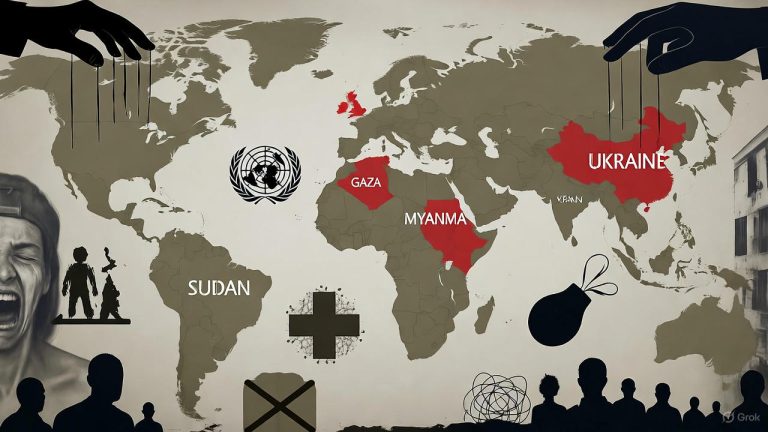
The world is sinking into a dangerous numbness. Wars, famine, and mass displacement no longer shock; they scroll past as routine headlines. From Gaza to Sudan, Myanmar to Ukraine, human suffering has become background noise in global politics. Institutions once meant to guard peace now stumble under paralysis, power asymmetry, and dwindling trust. As the United Nations and others falter, humanity risks losing not just faith in global order—but empathy itself. Indifference, now, is the world’s deadliest contagion.