

Africa CEO Forum 2025 | Presidential Panel with President Ramaphosa, Paul Kagame & More
At the 2025 Africa CEO Forum in Abidjan, the air was thick not with celebration, but with reckoning. Africa, holding over 30% of the world’s mineral resources, remains plagued by weak trade integration, institutional failure, and structural dependency. Presidents Cyril Ramaphosa of South Africa, Paul Kagame of Rwanda, Mohamed Ould Ghazouani of Mauritania, Bassirou Diomaye Faye of Senegal, and Tiémoko Meyliet Koné – Vice-President of Côte d’Ivoire – offered an unfiltered, brutally honest discussion on the real state of the continent.

At the 2025 Africa CEO Forum in Abidjan, the air was thick not with celebration, but with reckoning. Africa, holding over 30% of the world’s mineral resources, remains plagued by weak trade integration, institutional failure, and structural dependency. Presidents Cyril Ramaphosa of South Africa, Paul Kagame of Rwanda, Mohamed Ould Ghazouani of Mauritania, Bassirou Diomaye Faye of Senegal, and Tiémoko Meyliet Koné – Vice-President of Côte d’Ivoire – offered an unfiltered, brutally honest discussion on the real state of the continent.
This was not a stage for symbolic unity. It was a live cross-examination of African leadership, institutions, and private sector inertia. This was not theatre. It was reality. And the truths were painful.
Kagame: “We Are Actually Our Own Problems”
Rwandan President Paul Kagame’s intervention was stern. When asked whether Trump-era aid cuts were a blow to Africa, he countered firmly: “We can’t keep depending on what others are saying or doing about us.” This position is consistent with Rwanda’s record, as less than 30% of its national budget relies on external aid (IMF, 2024).
Kagame’s critique extended beyond aid. He condemned Africa’s reliance on external mediation in conflicts. Speaking on DRC-Rwanda tensions, he stated, “Qatar succeeded where the AU failed.” It was a direct indictment of African Union inefficiency. This aligns with findings by the Institute for Security Studies, which concluded that AU peace and security efforts are often uncoordinated and underfunded.
Kagame previously led the AU institutional reform agenda between 2016 and 2018, proposing financial autonomy, leaner structures, and increased accountability. Yet as he lamented, “What we agreed on is not implemented.” His conclusion was damning but honest. Africa has the knowledge, vision, and institutions, but lacks execution.
Ramaphosa’s Diplomatic Pragmatism: Trade, Power, and Partnership
President Cyril Ramaphosa struck a more measured tone. As Chair of the G20 in 2025, he saw opportunity. His push to elevate Africa’s voice globally was sincere, but grounded in realism.
He praised the African Continental Free Trade Area (AfCFTA), calling it “transformative.” Yet only 17% of surveyed African CEOs at the forum believed AfCFTA had impacted their business. This figure is confirmed in the official Africa CEO Forum Business Climate Survey 2025.
Ramaphosa urged the private sector to do more than sit on the sidelines. “I smelled money when I walked in… You must come and put it to real good use.” His plea was directed at Africa’s underperforming intra-continental trade, which, according to UNECA, still accounts for less than 15% of total African exports.
He advocated for investment in real infrastructure. Without functioning roads, ports, railways, and unified logistics, AfCFTA risks becoming a well-intentioned document with little practical value.
Eastern DRC: A Test of African-Led Peacebuilding
Both Kagame and Ramaphosa addressed the volatile conflict in eastern DRC, reaffirming that African-led solutions must prevail. Ramaphosa cited the Nairobi, Luanda, and AU peace frameworks as essential foundations for de-escalation, including the withdrawal of SADC troops in early 2025.
Yet the facts are stark. As of April 2025, over 6.9 million Congolese remain internally displaced, according to OCHA. While efforts have stabilised some fronts, peace remains fragile.
Ramaphosa emphasised, “In the end, African problems require African solutions.” Yet the continent continues to rely heavily on donors for peacekeeping. The AU Peace Fund, intended to raise $400 million by 2021, has only mobilised around $210 million as of late 2024 (AU Commission Report).
Resource Governance: Who Benefits from Africa’s Minerals?
Africa holds over 70% of global cobalt reserves, 30% of global bauxite, and 50% of manganese. Yet nearly 90% of its strategic minerals are exported as raw materials (World Bank, 2025). Kagame and Ramaphosa agreed that this must change.
Ramaphosa announced intentions to negotiate a “Critical Minerals Accord” during South Africa’s G20 chairmanship. This aligns with the African Union’s calls for mineral beneficiation and localisation, as outlined in the Africa Mining Vision.
Without regional coordination, Africa risks becoming a pawn in the global scramble between the United States, China, and Europe for green energy dominance. AfDB data confirms that over 70% of Africa’s lithium and cobalt exports go to China, while less than 3% are processed locally.
Institutional Weakness: AU Under Pressure
President Mohamed Ould Ghazouani defended the AU’s structure, citing reforms undertaken during his 2024 chairmanship. He referred to transparent electoral processes, organisational rotation, and the continent’s entry into the G20 as a permanent member.
Still, the facts contradict the institution’s aspirations. As of 2025, the AU continues to rely on external donors for 60% of its operational budget (AU Executive Council Budget 2024–25). Bureaucracy and fragmentation hinder implementation of even flagship projects like AfCFTA and Agenda 2063.
Kagame said it plainly: “AU systems live in another world, not this one.” His point was clear. Reform without implementation is fiction.
The 17% Problem: Private Sector Scepticism
Perhaps the most shocking revelation at the forum was the 17% belief in AfCFTA’s relevance among African CEOs. This figure, published by the Africa CEO Forum’s 2025 Business Sentiment Report, signals that the private sector either does not understand the policy or sees no tangible benefit.
Ramaphosa’s solution was to de-risk projects through sovereign guarantees, particularly in infrastructure. Kagame’s was to incentivise investment by offering legal certainty, functional courts, and regional stability.
Their logic is sound. As of 2024, only five out of 54 signatory countries had fully implemented AfCFTA tariff schedules and customs protocols (AfCFTA Secretariat, 2024). This means that goods still face barriers and logistical chaos, even within designated free trade corridors.
Trump’s Refugee Controversy: A Distraction or a Danger?
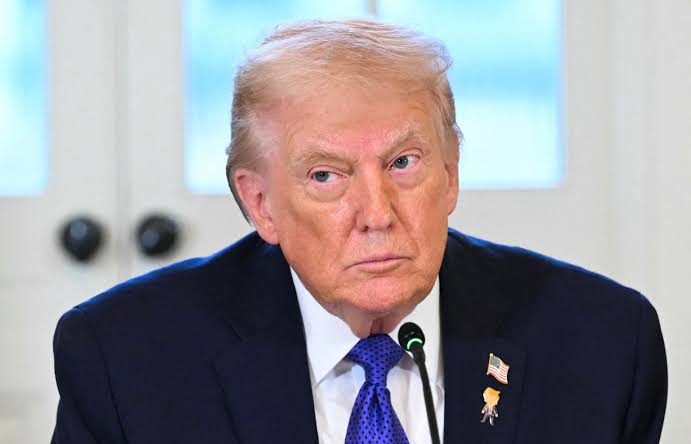
When asked about 49 white Afrikaner “refugees” being accepted into the United States under President Trump’s new immigration policy, Ramaphosa was unequivocal: “They do not fit the definition of a refugee.” South African law, grounded in the 1951 UN Refugee Convention, is clear—fear of democratic transformation is not persecution.
This controversy reflects deeper tensions in U.S.–Africa relations under Trump’s renewed “America First” posture. In 2024, the United States announced a $555 million cut to the African Development Bank’s concessional window (U.S. Congressional Appropriations Report, 2024). Such shifts underscore the urgent need for Africa to reduce its exposure to foreign policy fluctuations.
Conclusion: The Final Warning
This panel was not a ceremonial exercise. It was a clarion call. Kagame’s brutal honesty and Ramaphosa’s diplomatic precision converged on one message. Africa has everything it needs—resources, youth, talent, trade pacts, and global interest. Yet it still waits. For what?
Facts to Remember:
• AfCFTA covers 54 countries, 1.4 billion people, and a combined GDP of $3.4 trillion.
• Intra-African trade remains below 15%.
• 70% of cobalt reserves are in Africa, but less than 10% is refined locally.
• 60% of the AU’s operating budget comes from external donors.
• Only 17% of African CEOs see AfCFTA affecting their operations (Africa CEO Forum 2025 Survey).
The excuses have expired. If this moment passes without action, the next forum will be a post-mortem.
Africa’s enemies are not only external. They are inertia, fear, bureaucracy, and a legacy of overreliance on foreign saviours. The continent’s future requires radical courage, political unity, and institutional self-respect.
Let this not be another conversation. Let it be the beginning of consequences.
Aric Jabari is the Editorial Director of the Sixteenth Council.

Critical Minerals and the Green Transition: Europe’s New Dependency Risk