
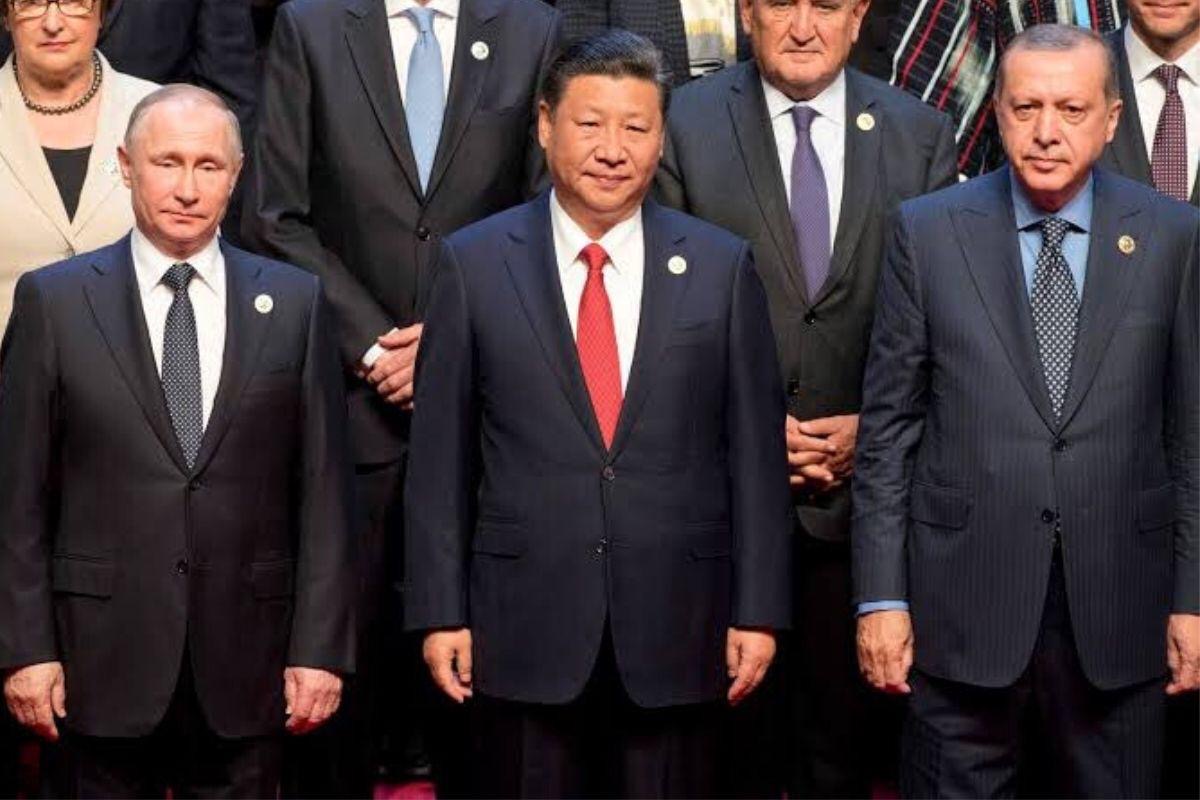
Will Russia, Türkiye and China Back Iran?
As tensions escalate between Israel and Iran, Russia, Türkiye, and China face a critical test. Though all three condemn Israel’s strikes, none have offered military backing to Iran. Their strategic caution risks rendering their influence meaningless. A multilateral de-escalation strategy—through Astana Plus, BRICS diplomacy, and reconstruction planning—offers a peaceful path forward. The moment demands more than words; it demands coordinated action to avert a regional catastrophe.

As tensions escalate between Israel and Iran, the situation poses a grave risk to regional stability. A multilateral de-escalation strategy through diplomatic platforms such as Astana Plus, BRICS, and reconstruction planning could offer a peaceful path forward. Coordinated international action is urgently needed to prevent a wider catastrophe.
As open hostilities erupt between Israel and Iran, the global spotlight turns to three influential powers: Russia, Türkiye and China. Each has condemned Israel’s strikes as provocative and dangerous, but none has pledged military assistance to Iran. As the situation threatens to escalate beyond bilateral conflict, a key question emerges: are these powers willing or even able to move from words to meaningful action?
Geopolitical Alignments: Strategic Interests, Strategic Caution
Russia has publicly criticised Israel’s airstrikes, describing them as “unacceptable” and a “dangerous provocation”. Yet Moscow maintains relations with both Israel and Iran. While Iran has supplied drones used in Russia’s war against Ukraine, Israel and Russia have maintained airspace coordination in Syria. This dual diplomacy reflects Russia’s reluctance to alienate either partner.
Türkiye, a NATO member, has condemned Israel’s actions in the strongest terms. President Recep Tayyip Erdoğan accused Prime Minister Benjamin Netanyahu of “dragging the region and the world into disaster”. Despite rhetorical intensity, Ankara has offered no material support to Tehran. Relations between Türkiye and Iran have historically oscillated between cooperation and rivalry, particularly in Syria and Iraq.
China, Iran’s largest oil customer and a key trade partner of Israel, has urged restraint. The Chinese Foreign Ministry condemned the strikes as a violation of Iranian sovereignty and called for a political solution. While China sees Iran as a vital partner in the Belt and Road Initiative, it avoids entanglement in Middle Eastern conflicts.
None of the three countries has committed military assets or logistical support to Iran. Each is choosing diplomatic caution over confrontation.
Policy Frameworks: Strategic but Insufficient
1. Russia–Iran Comprehensive Strategic Partnership Treaty (2024)
Signed in January 2024, this agreement aimed to deepen trade, defence cooperation and geopolitical coordination. However, the treaty contains no mutual defence clause. Its value lies in economic alignment and political messaging rather than hard security guarantees.
2. Türkiye’s “Strategic Depth” Doctrine
Coined by former Foreign Minister Ahmet Davutoğlu in 2001, the doctrine prioritises regional leadership through soft power, trade and diplomacy. Türkiye opposes foreign-imposed regime change, and its posture towards Iran reflects this conservative approach, supporting sovereignty but avoiding direct conflict.
3. China’s Global Security Initiative (GSI, 2022)
Launched by President Xi Jinping, the GSI promotes “common, comprehensive and sustainable security” through dialogue and non-intervention. China’s call for de-escalation fits this framework, but the GSI lacks enforcement mechanisms or clear thresholds for action in the face of armed conflict.
4. Where the Policies Fall Short
None provided crisis response mechanisms. Military ambiguity weakens deterrence against external escalation. The absence of coordinated diplomacy limits leverage to prevent regime destabilisation or economic collapse in Iran.
What They Stand to Lose
● Energy Security: A full-scale war could disrupt the Strait of Hormuz, through which 20 per cent of global oil passes. China, heavily reliant on Iranian oil, would suffer severe supply shocks. Türkiye, an energy corridor to Europe, would face secondary impacts and rising domestic costs.
● Strategic Influence: Iran is a key player in the Shanghai Cooperation Organisation and BRICS. Its collapse or transformation could diminish Russia and China’s campaign for a multipolar world.
● Border and Domestic Stability: Türkiye faces the highest immediate risk. A refugee wave from Iran could replicate the Syrian crisis, exacerbating domestic tensions and border security challenges.
● Diplomatic Credibility: All three powers present themselves as champions of international law and sovereignty. Failure to prevent further escalation or to support post-war recovery would erode this position globally.
Strategic Policy Advisory: A Multilateral De-escalation Strategy
To protect their interests while avoiding confrontation, Russia, Türkiye, and China should adopt a structured joint policy response based on four pillars:
1. Astana Plus Mediation Framework
Expand the existing Syria-focused Astana format (Russia, Türkiye, Iran) to include China and the United Nations. This can serve as a neutral platform for ceasefire negotiation, nuclear non-proliferation discussions and regional crisis management.
2. BRICS Special Envoy Mechanism on Iran
Activate BRICS diplomatic channels by appointing a Special Envoy on Middle East Stability. This forum should focus on preventing regime collapse, ensuring oil flow continuity and offering back-channel diplomacy.
3. UN Security Council Mandated Nuclear Inspections
Push for a Security Council resolution that re-establishes IAEA inspections in Iran. In exchange, guarantee non-aggression commitments by Israel and others, brokered with Russian and Chinese support.
4. Joint Iran Reconstruction Fund
Anticipating post-conflict recovery, Russia, China and Türkiye, along with India and Brazil, should pool development funds to stabilise Iran’s economy. This initiative could anchor Iran in a peaceful, rule-based international order.
Conclusion: A Moment of Reckoning
The window to prevent a regional war is rapidly closing. Russia, Türkiye and China have significant influence and even more to lose. Condemnations alone will not shield their economies, protect their borders or enhance their global credibility.
Their challenge now is to act collectively and decisively, not with weapons, but with diplomacy, institutional mechanisms and strategic foresight. Whether they rise to that challenge may well define the next phase of the global order.
Aric Jabari is the Editorial Director of the Sixteenth Council.
Critical Minerals and the Green Transition: Europe’s New Dependency Risk