
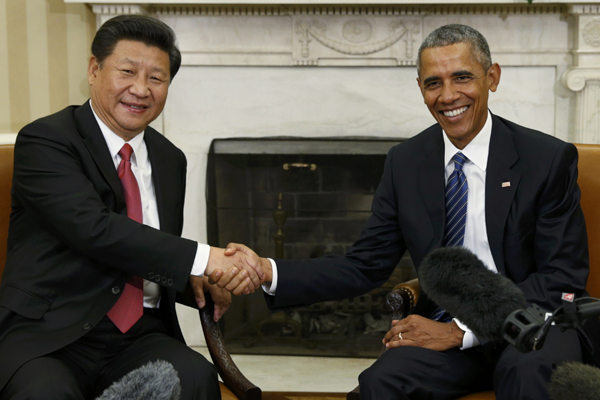
How America Powered the Rise of China—Willingly
America's engagement with China was built on the belief that economic integration would lead to political liberalization. Instead, the U.S. facilitated China's rise by granting trade privileges, offshoring industries, and sharing technology. This strategy, driven by profit motives and strategic naivety, empowered a rival that now challenges U.S. dominance. Recognizing this, America faces the task of realigning its policies to safeguard national interests and technological sovereignty.

The rise of China was not inevitable. It was designed. But not by Beijing alone. Washington, Wall Street, and Silicon Valley all had a hand in building the very architecture that allowed the Chinese Communist Party (CCP) to emerge as America’s most formidable rival.
China did not steal its ascent. It was handed to them—often with a smile and a signature.
In a world searching for villains and heroes, the truth is far more uncomfortable: America willingly fueled the rise of China. And now it must face the strategic consequences of its own creation.
The Blueprint: How the West Helped China Build
The transformation of China from agrarian backwater to technological juggernaut was the defining geopolitical story of the last 40 years. But this story is incomplete without acknowledging the central role played by the United States.
The evidence is not hard to find. Look closely at the key pillars of Chinese ascent:
1. Trade Normalization and WTO Entry
In 2000, President Bill Clinton led the push for China’s permanent normal trade relations (PNTR) status, paving the way for its entry into the World Trade Organization in 2001.
The promise? That China would liberalize, democratize, and integrate into the rules-based global order.
The reality? China exploited WTO rules to build mercantilist dominance, maintained currency manipulation, and never truly opened its markets in return. But by then, it was too late. America had allowed it.
2. Offshoring and the Hollowing Out of U.S. Industry
No one forced American companies to ship entire factories to Shenzhen and Suzhou. They did it in pursuit of margins.
Wall Street cheered. Consumers got cheaper goods. CEOs got bonuses. But the long-term cost was the surrender of America’s industrial base—and the empowerment of a strategic rival.
3. Technology Transfer and Joint Ventures
For decades, U.S. companies handed over their intellectual property in exchange for market access in China. Automotive giants, aerospace firms, and tech corporations all agreed to “joint ventures” that conveniently funneled decades of American R&D into Chinese labs.
It wasn’t theft. It was consent.
4. Academic and Scientific Collaboration
American universities opened their doors to Chinese students and researchers with admirable naivety. These students were trained in America’s most advanced fields—artificial intelligence, nuclear physics, material science—and then quietly returned home.
Some went back to build companies. Others went back to build weapons.
Either way, the U.S. trained the very minds who now compete—or conspire—against it.
The American Delusion: Engagement Will Tame the Dragon
The architects of U.S. policy believed they could shape China in their own image. The doctrine of “constructive engagement” rested on a simple assumption: as China got richer, it would become more democratic, more transparent, more Western.
That assumption proved catastrophically wrong.
What Washington failed to grasp is that the CCP never intended to be “engaged.” It intended to learn, extract, adapt—and then compete. From the start, Chinese leaders made it clear they viewed engagement not as a partnership, but as a means to an end.
Deng Xiaoping said it best: “Hide your strength, bide your time.” And while America sang songs of globalization, China built factories, data networks, and hypersonic missiles.
Wall Street and the Love Affair with the Dragon
While policymakers spoke the language of democracy and human rights, America’s financial class was too busy counting yuan.
BlackRock, Goldman Sachs, Vanguard—all rushed into Chinese capital markets, lobbying Washington for greater access and fewer restrictions.
Chinese state-backed companies, many linked to the PLA or surveillance apparatus, were listed on U.S. stock exchanges without adhering to the same audit standards as American firms.
Entire indexes were created to facilitate global capital flowing into China—even as Beijing clamped down on freedom in Hong Kong, interned Uyghurs, and crushed dissent.
There was no mystery. Everyone saw it. But the profits were too good.
Silicon Valley: Innovation for Export
Nowhere did America empower China more profoundly than in the technology sector.
Google’s early partnerships with Chinese universities seeded the growth of Chinese AI labs.
Apple relied heavily on Chinese manufacturing and supply chains, giving rise to entire ecosystems of hardware expertise in Shenzhen.
American venture capital flowed freely into Chinese startups—some of which now compete directly against their benefactors.
Ironically, while Silicon Valley preached openness and borderless innovation, the CCP was quietly building the Great Firewall, a nationalist digital fortress designed to keep American influence out and control within.
Academia: Open Doors and Closed Eyes
China’s penetration of American academia is now well documented. The Thousand Talents Program openly recruited researchers from U.S. universities—some of whom were later indicted for espionage or undeclared financial ties.
But beyond the criminal cases is a broader truth: American universities, addicted to foreign tuition and blind to ideological risks, became easy prey.
Confucius Institutes spread across campuses, often with the tacit acceptance of administrators more concerned with revenue than security. Students, often under surveillance themselves, brought not just knowledge home—but sometimes entire research portfolios.
The Strategic Wake-Up Call
It took the Trump administration to begin reversing the tide.
Tariffs were the first wake-up call.
Huawei’s exclusion from U.S. networks signaled the beginning of tech decoupling.
Visa restrictions, export controls, and semiconductor bans followed.
Now, the Biden administration has largely continued those policies—proof that the shift is not partisan. It is existential.
The American establishment now sees, belatedly, what many in intelligence and defense had warned for years: China used openness not to transform, but to infiltrate and surpass.
What Comes Next: The Reckoning
America now stands at a crossroads. The relationship with China has moved past the romance of “Chimerica” and entered the hard realm of rivalry.
There are three strategic imperatives going forward:
1. Rebuild Domestic Strength
America must invest in its own industries, from semiconductors to rare earths, from advanced manufacturing to STEM education. No more outsourcing the future.
2. Redraw the Map of Alliances
The U.S. must tighten ties with allies who share its values—and decouple strategically from those who don’t. Globalization as we know it is over. Strategic alignment is the new currency.
3. Reclaim Technological Sovereignty
Tech must no longer be blind to geopolitics. The age of building in Silicon Valley and scaling in Shenzhen is gone. Companies must choose sides.
Final Thoughts: The Empire That Funded Its Challenger
There’s an old saying: “The greatest trick the devil ever pulled was convincing the world he didn’t exist.” In this case, the CCP never hid. It declared its intentions. It published its plans. It codified them in state doctrine.
The real trick was pulled by America—on itself.
In its eagerness to globalize, moralize, and monetize, it failed to see that it was constructing its own challenger. But history is not destiny. And mistakes can be reversed—if nations have the courage to confront them.
China rose because America opened the door.
Now, America must decide whether it has the resolve to close it.
Dr Brian O. Reuben is the Executive Chairman of the Sixteenth Council.

Energy, Food, and Power: The New Geopolitics of Global Markets