
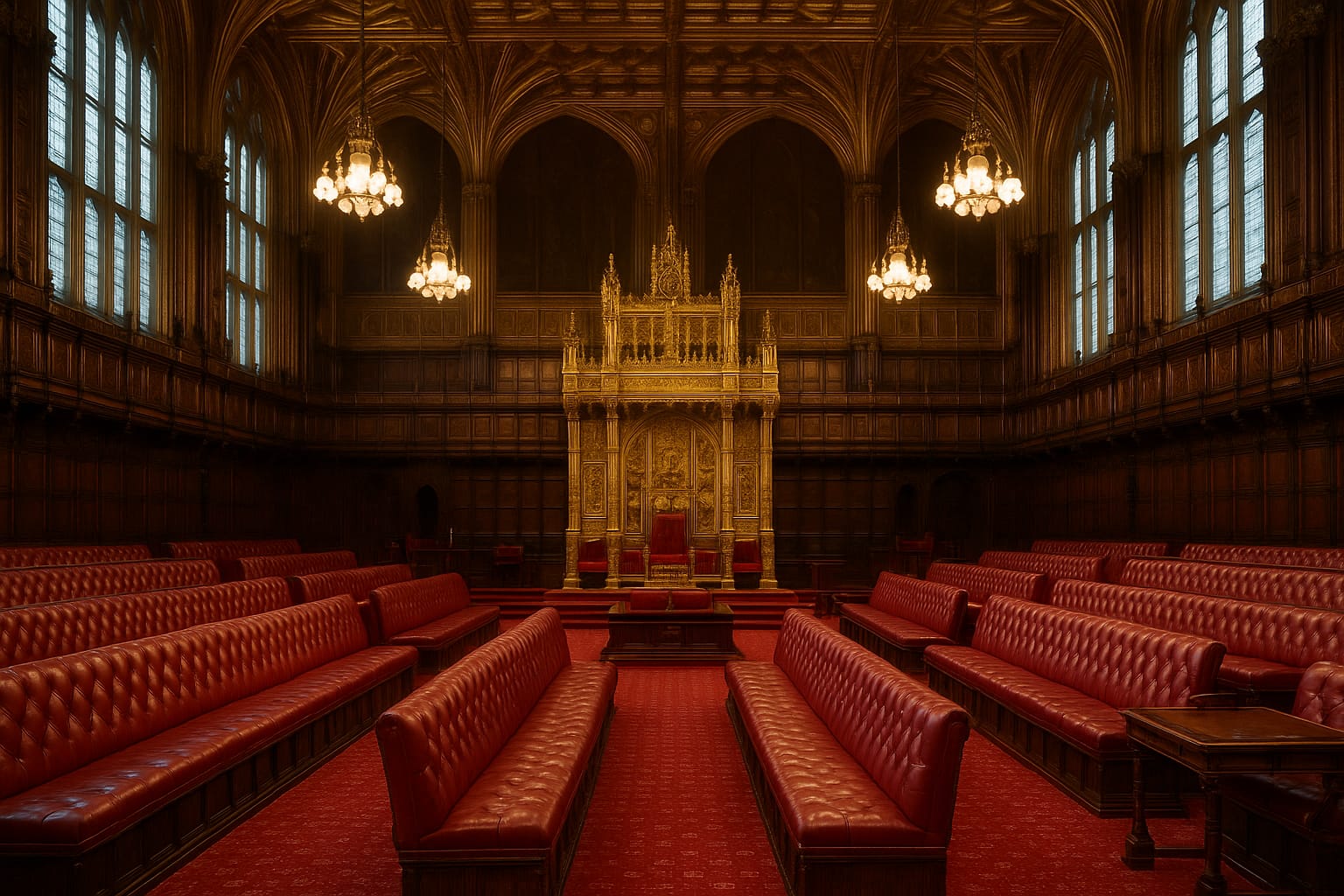
The House of Lords: A Blueprint for Strengthening Britain’s Democratic Architecture
The future of the House of Lords has become a defining question for British democracy. While calls for abolition grow louder, removing the upper chamber would erode expertise, weaken scrutiny, and concentrate excessive power in the executive. The real opportunity lies in intelligent reform—introducing term limits, strengthening committees, increasing transparency, and modernising appointments. A reformed Lords can offer continuity, strategic insight, and stronger governance at a time when the UK needs long-range thinking more than ever.

Overview
The debate over the future of the House of Lords has intensified, with growing calls for abolition fuelled by public frustration and political opportunism. Yet the idea of dismantling the upper chamber misunderstands its constitutional value. The UK does not need fewer institutions of scrutiny—it needs stronger, more effective ones.
Abolition would diminish the quality of governance. Intelligent reform would strengthen it.
This article sets out a modern blueprint for renewing the House of Lords in a way that enhances legitimacy, preserves expertise, and protects the balance of the UK’s constitutional system.
Why the House of Lords Still Matters
A Strategic Reservoir of Experience
The Lords brings together individuals who have led major public institutions, commanded military operations, negotiated international agreements, built businesses, and shaped policy across decades. This institutional memory is a national asset—one that cannot be replaced by a fully elected chamber subject to rapid political turnover.
A Critical Check on Executive Power
With the Commons often dominated by strong party whips and compressed legislative timelines, the Lords serves as a deliberate pause button. It ensures that legislation is scrutinised with care, technical insight, and long-term perspective. Its role is refinement, not obstruction.
Guarding the Constitutional Balance
Few stable democracies operate without a second chamber. Removing the Lords risks concentrating excessive authority in the hands of the executive and producing a more brittle political system.
Why Abolition Falls Short
The argument for abolition centres on legitimacy and accountability. These concerns are valid—but they do not require the elimination of the institution. Instead, abolition would:
- Remove an independent check on government during periods of strong majorities
- Sacrifice policy expertise that supports more effective lawmaking
- Risk creating legislative gridlock if replaced with a fully political, elected chamber
- Undermine long-term policy thinking at a time when complex challenges demand it
Abolition is a dramatic gesture—not a constitutional solution.
A Modern, Effective House of Lords: Pathways to Reform
1. Introduce Fixed Terms for Peers
Lifetime appointments weaken public confidence. A 10–12-year term, with the option of one renewal or none, strikes a balance between independence and accountability.
2. Create a Hybrid Membership Model
A reformed Lords should blend:
- Appointed experts selected through an independent, transparent process
- Elected members serving long, staggered terms that avoid competition with the Commons
This preserves expertise while enhancing democratic legitimacy.
3. Reduce the Size of the Chamber
A streamlined membership of 400–500 active peers would improve efficiency and clarity of purpose.
4. Strengthen Committee Leadership
Lords committees are among the most respected components of the UK’s legislative system. Empowering them to lead on long-horizon issues—AI, cyber governance, economic competitiveness, climate resilience—would position the chamber as Parliament’s strategic foresight engine.
5. Increase Transparency in Appointments
Clear standards, published criteria, and reporting on appointments would curb perceptions of patronage and bolster trust.
The Strategic Case for Reform
The UK is navigating an era defined by geopolitical realignment, technological disruption, demographic pressures, and a fracturing global order. These challenges demand governance anchored in evidence, experience, and long-term thinking.
Abolition of the House of Lords would strip the country of an institution uniquely equipped to provide that.
Reform, not removal, is the path to a stronger constitutional future.
A modernised House of Lords—disciplined, diverse, strategically oriented—can serve as a stabilising force and a source of intellectual depth in British public life. Its renewal is not merely a matter of tradition; it is a matter of national interest.
Dr Brian O Reuben is the Executive Chairman of the Sixteenth Council


Trump Can’t Take Greenland – and the World Knows Why