2026 Geopolitics: Power Without Dominance

Geopolitics in 2026 is defined by power without dominance. Major states retain significant military and economic capacity, yet lack the ability to impose durable outcomes unilaterally. Strategic competition has shifted toward chokepoints in technology, energy, and finance, while unresolved conflicts are increasingly managed rather than resolved. Fiscal constraints, alliance recalibration, and regional power assertion are reshaping global behaviour, producing a fragmented international system marked by calibrated escalation, persistent friction, and heightened strategic uncertainty.


Read More2026 Geopolitics: Power Without Dominance

The Missing Middle: The Structural Financing Gap That Keeps SMEs Small

Small and medium-sized enterprises (SMEs) drive over 90% of African businesses and are vital to employment, innovation, and industrialisation. Yet many remain trapped in the “missing middle”—too large for microfinance but too small or informal for bank loans or venture capital. This structural financing gap limits their ability to expand, modernise, or join regional value chains. Without growth capital, SMEs operate below potential, reinforcing inequality and slowing Africa’s broader economic transformation and competitiveness.

Read MoreThe Missing Middle: The Structural Financing Gap That Keeps SMEs Small

A Generation in Flux: Youth, Migration and the New Political Contract

Africa’s post-independence promise to its youth—dignity, work, and belonging,has eroded. Today, with a median age under 20, most young Africans face exclusion from jobs and politics, while leaders remain decades older. Migration has become a silent protest, reflecting disillusionment with stagnant governance. Youth no longer seek token inclusion but credible participation and reform. Unless governments rebuild trust through opportunity and accountability, Africa’s brightest generation will keep voting with their feet—reshaping politics, economies, and the continent’s future from afar.

Read MoreA Generation in Flux: Youth, Migration and the New Political Contract

Aspiration or Implementation: Friction and the AfCFTA’s Great Experiment

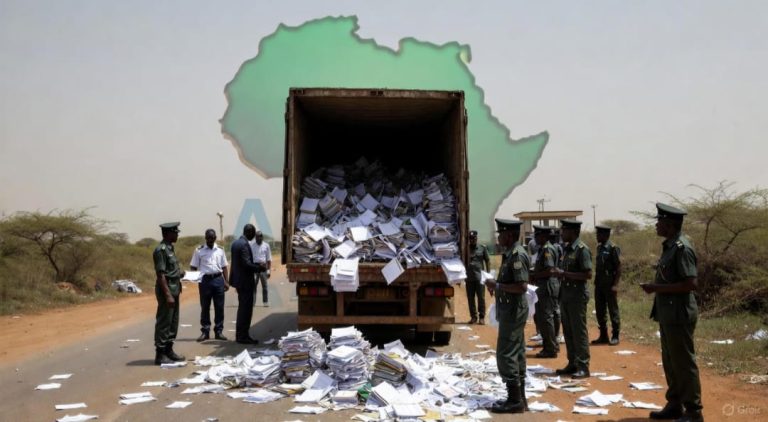
A shipment from Accra to Lagos should take a day but often takes four—stalled by paperwork, checkpoints, and unofficial fees. This reflects the persistent barriers undermining the African Continental Free Trade Area (AfCFTA). Launched in 2021 to create a seamless African market, AfCFTA promised lower tariffs, unified trade rules, and continental growth. Yet, nearly four years later, non-tariff barriers, weak infrastructure, and fragmented regulations continue to slow progress. Vision remains high, but real implementation lags behind ambition.

Read MoreAspiration or Implementation: Friction and the AfCFTA’s Great Experiment

Nigeria Stands Risks -2027

The stakes are unusually high: the economy is under intense pressure from inflation, unemployment and widening inequality; insecurity persists in multiple regions, from banditry and terrorism in the North to communal clashes and militancy in the South; and public institutions are grappling with questions about their credibility, autonomy and capacity.

Read MoreNigeria Stands Risks -2027

Will Nigeria’s Diaspora be Silenced Again in 2027?

Nigeria’s diaspora, over 17 million strong, contributes more than USD 20 billion annually—often surpassing oil revenues—while transferring skills, mentoring startups, and shaping Nigeria’s global image. Yet, despite their profound stake, they remain excluded from federal elections, creating a democratic deficit. With diaspora voting legislation gaining momentum, Nigeria faces a defining choice: act decisively to enfranchise its global citizens by 2027 or risk another cycle of exclusion. This moment offers a blueprint to strengthen democracy through its worldwide citizenry.

Read MoreWill Nigeria’s Diaspora be Silenced Again in 2027?

“The Line” Review

Saudi Arabia’s \$500 billion mega project, “The Line,” part of the NEOM initiative under Vision 2030, faces financial and ethical scrutiny amid falling oil revenues. Planned as a 100% renewable, linear city for 9 million residents, its projected 2030 population has been cut to 300,000. Critics cite massive costs, budget deficits, and alleged forced displacements of the Al-Huwaitat tribe. The project’s future remains uncertain, with global economic implications, including potential effects on Africa where Saudi investments may reach \$41 billion in the next decade.

Read More“The Line” Review

How Africa’s Infrastructure Gaps Are Holding Back Regional Value Chains

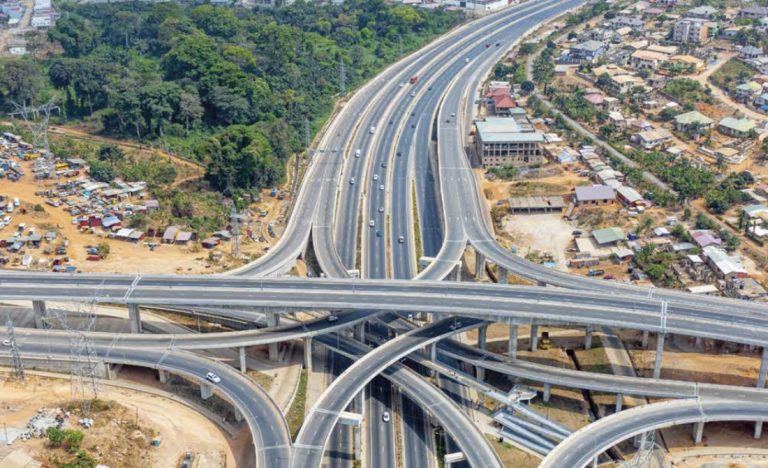
Despite the promise of AfCFTA, Africa’s regional trade remains stunted by a critical and underexamined barrier: infrastructure. This dispatch argues that fragmented, underfinanced, and nationally siloed infrastructure systems are preventing the emergence of regional value chains. From broken transport links to disconnected power grids and outdated customs systems, the lack of coordinated, production-enabling infrastructure is the single most decisive bottleneck to industrial integration. Without a radical shift in governance, finance, and planning, Africa risks missing its moment in the global value chain race.

Read MoreHow Africa’s Infrastructure Gaps Are Holding Back Regional Value Chains

Reimagining Nigeria’s Business Environment for Inclusive Growth

Nigeria’s private sector holds immense potential, but systemic frictions—regulatory inefficiencies, infrastructure gaps, and weak contract enforcement—continue to limit growth. This report offers a structural assessment of the business environment across five critical pillars, highlighting the urgent need for institutional reform. While recent policy efforts show intent, deeper, systemic change is required to unlock investment, drive innovation, and position the private sector as a key engine of national development. The time for coordinated, transformative reform is now.

Read MoreReimagining Nigeria’s Business Environment for Inclusive Growth

Are African Economies Prepared for a Global Trade Reordering Driven by U.S. -China Decoupling?

As the U.S.–China economic decoupling redefines global trade, Africa faces a critical inflection point. The continent must either seize emerging supply chain opportunities or risk deeper marginalisation. This dispatch lays out a strategic readiness agenda—from industrial zoning to smart trade defence—aimed at positioning Africa within the evolving global trade order.

Read MoreAre African Economies Prepared for a Global Trade Reordering Driven by U.S. -China Decoupling?