Global Strategy Nexus- Africa Summit 2025 – Legislating for Leadership: Can Africa’s Laws Keep Pace with Private Sector Ambition
Africa’s private sector drives more than 60 percent of our jobs and nearly 70 percent of our collective GDP. It is the engine that will power sustainable growth across our nations. Yet this engine must run on the fuel of a modern, predictable, and responsive legal framework.

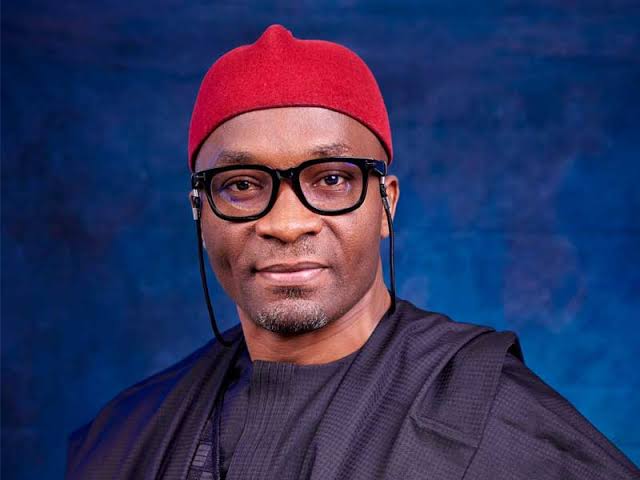
Special Address by Rt Hon Benjamin Kalu, Deputy Speaker of the Nigeria House of Representatives
1. Welcome
It is a genuine pleasure to join you today at the Global Strategy Nexus – Africa Summit 2025. We gather under the vital theme, “Unlocking Africa’s Private Sector Potentials for Economic Development.”
Thus, I will be talking on the topic ‘Legislating for Leadership: Can Africa’s Laws Keep Pace with Private Sector Ambition?’—a question that strikes at the heart of our continent’s economic transformation.
2. The Imperative: Private Sector as Growth Engine
Africa’s private sector drives more than 60 percent of our jobs and nearly 70 percent of our collective GDP. It is the engine that will power sustainable growth across our nations. Yet this engine must run on the fuel of a modern, predictable, and responsive legal framework. Without laws that adapt swiftly to evolving markets—whether digital finance, renewable energy, or tech innovation—we risk stalling the very momentum we seek to accelerate.
3. Nigeria’s Legislative Response
Here in Nigeria, our Ninth and Tenth National Assemblies have moved decisively to update our statutes and unleash private-sector potential. In 2022, we passed the Nigeria Startup Act, which simplifies company registration, offers regulatory incentives, and establishes seed funds that have already nurtured over 200 homegrown technology ventures. That same year, the FinTech Act created a regulatory sandbox, strengthened consumer protections, and attracted nearly $750 million in foreign fintech investment last year alone.
In 2021, we enacted the Petroleum Industry Act, modernizing sector governance and unlocking new gas infrastructure investments. Moving into 2023, the Nigeria Electricity Act unbundled market regulation, introduced cost-reflective tariffs, and paved the way for more inflows in renewable energy capital over the next five years. We also adopted the Data Protection Act of 2023, aligning our privacy laws with global standards to safeguard citizens and enable e-commerce growth.
Just this year, the House of Representatives passed four streamlined tax-reform laws designed to eliminate multiple taxation, curb overt taxation, and introduce productivity incentives for small and medium-sized enterprises. These reforms cut red tape for businesses, boost investment confidence, and underpin our broader agenda to make Nigeria one of the most tax-competitive economies on the continent.
I invite private-sector actors to engage directly with parliamentary caucuses, co-drafting bills, and serving on oversight missions so that our statutes reflect operational realities. And I ask our development partners to deepen technical assistance in regulatory impact analysis, helping our assemblies enact evidence-based, high-impact laws with speed and precision.
4. Regional Harmonization & AU Leadership
Beyond our borders, as Chairman of the African Union Parliamentary Assembly’s Monetary and Financial Affairs Committee, I am leading efforts to harmonize financial regulations across member states under the African Continental Free Trade Area. We are developing a Model Parliamentary Bill on Digital Finance to ensure interoperable frameworks for mobile money, digital currencies, and fintech innovation from Cairo to Cape Town. By reducing cross-border payment friction, we will forge truly pan-African value chains.
5. Challenges & Opportunities
Of course, crafting dynamic legislation presents challenges. Parliaments must strengthen their own capacity, establishing specialized research desks and training legislators to understand complex financial technologies. We must ensure policy coherence across sectors, so that energy reform supports digital infrastructure, and data privacy safeguards enable health-tech solutions. Above all, we must sustain continuous dialogue with the private sector—entrepreneurs, chambers of commerce, and civil society—to keep our laws market-driven and fit for purpose.
6. Call to Action
Therefore, I call on all of us—legislators, business leaders, and development partners—to forge new partnerships. I urge my fellow parliamentarians to create ‘Innovation Desks’ within our legislative secretariats to monitor emerging sector needs in real time. I invite private-sector actors to engage directly with parliamentary caucuses, co-drafting bills, and serving on oversight missions so that our statutes reflect operational realities. And I ask our development partners to deepen technical assistance in regulatory impact analysis, helping our assemblies enact evidence-based, high-impact laws with speed and precision.
7. Closing
My fellow Africans and Nigerians, we stand at a crossroads. With the right legal architecture, our private sector can drive resilient economies, generate quality jobs, and deliver shared prosperity. Let us seize this moment to craft laws that match the dynamism and ambition of our entrepreneurs. I look forward to our discussions today and to translating our collective vision into lasting legislative reforms.
Thank you, and may our partnerships yield a brighter future for all of Africa.