Durability Without Stability: Iran’s Unravelling Order
Iran enters 2026 in a condition of managed instability rather than imminent collapse. Sustained domestic unrest, economic contraction, and deepening legitimacy deficits have narrowed the regime’s strategic options, pushing it toward repression as a default mode of governance. While the state retains formidable coercive capacity, its margin for error is shrinking. Internal fragility now intersects with heightened regional risk, increasing the likelihood that external escalation becomes a tool of internal survival rather than deliberate strategy.

Strategic Overview
Iran is facing one of the most consequential periods of internal and external strain since the establishment of the Islamic Republic in 1979. what began as mass protests against economic hardship in late 2025 has transformed into a broader and more sustained challenge to the political authority of the state. The widespread unrest driven by rising living costs, currency collapse, declining access to basic goods, and the most brutal state repression in decades has quickly expanded in scope and meaning. The demonstrations now reflect deeper grievances related to governance, political exclusion, and the absence of credible mechanisms for reform. The state stands at a critical juncture, with these domestic pressures intersecting with heightened geopolitical tensions involving the United States, neighbouring states, and global powers.
At the core of the current crisis is a deep and accelerating erosion of political legitimacy as public trust in state institutions has steadily declined over the years, undermined by persistent corruption, authoritarian governance, and the government’s growing failure to guarantee basic social and economic stability. Unlike earlier episodes of unrest, the protests of late 2025 represent a more fundamental challenge to the political system itself as chants and slogans increasingly targeted unelected institutions, the security establishment, and the concentration of power within the clerical leadership. This shift signals a widening gap between state authority and societal consent, most evident among urban populations and younger citizens who see limited opportunities for meaningful political participation or reform.
The government’s response to the unrest has been predominantly coercive, relying heavily on repression to maintain control. The security forces have resorted to widespread use of force, mass detentions, and pervasive surveillance to quell dissent. These actions have been complemented by far-reaching restrictions on digital communication and media coverage, effectively curbing information flow and limiting public coordination. Although such measures have, for the moment, reduced the visibility of protests, they have simultaneously deepened public anger and underscored the regime’s dependence on coercion rather than dialogue or reform. The continued use of force as the primary tool for preserving order highlights the diminishing scope of policy alternatives available to the leadership.
Iran’s deepening economic crisis has intensified its broader crisis of legitimacy as long-standing structural deficiencies, compounded by renewed international sanctions and declining oil revenues, have driven the economy into a severe contraction. Inflation has reached alarming levels, the national currency has depreciated, and unemployment, especially among young people remains persistently high. The government’s decision to scale back energy subsidies and social welfare measures, which once served as vital instruments of stability, has further aggravated public frustration. As economic hardships mount, discontent has spread across diverse segments of society, drawing workers, students, and small business owners into a shared movement of protest and magnifying the social dimensions of the unrest.
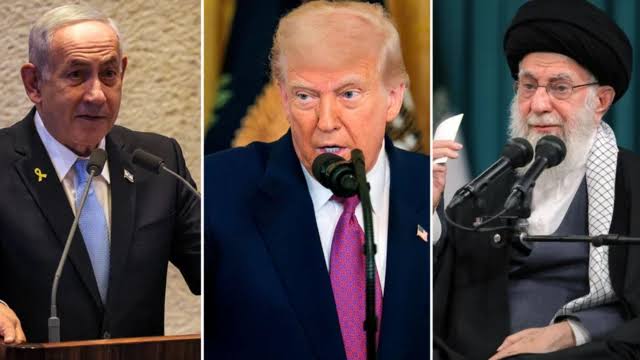
Amidst the volatile environment marked by repression at home, insecurity abroad, and diminishing strategic room for manoeuvre, Iran finds itself operating within an increasingly tense and competitive geopolitical landscape. Relations with the United States remain adversarial, defined by sanctions, mutual deterrence, and the absence of sustained diplomatic engagement. Meanwhile regional rivals, particularly Israel and several Gulf states, are closely monitoring Iran’s internal dynamics, assessing both the risks of instability and the potential opportunities to weaken Iranian influence. Although Iran maintains partnerships with Russia and China, these relationships remain largely transactional, providing diplomatic backing and selective economic cooperation rather than comprehensive security commitment to Iran’s long-term stability. This leaves Iran strategically constrained, operating in an increasingly narrow space between Western pressure and conditional non-Western support.
Operation Context
The convergence of political, economic, and social pressures have created a highly unstable operational context for Iran. The country is experiencing widespread public demonstrations that
have expanded geographically and demographically, spreading beyond major cities to provincial towns, including Tehran, Mashhad, Isfahan, and Shiraz, involving diverse social groups such as students, urban professionals, workers, and small business owners. Unlike previous waves of dissent, the diversity of protestors have made the protests less predictable and more difficult for the state to contain. The current movement has grown increasingly political in nature, directly challenging the legitimacy of the system and targeting the clerical hierarchy, the security apparatus, and unelected power structures.
The regime’s operational response has been dominated by the use of coercive force as security agencies and paramilitary formations, notably the Basij and the Islamic Revolutionary Guard Corps (IRGC), have been mobilised to suppress protests through crowd-control operations, mass detentions, and heightened surveillance. Reports suggest that several thousand people have been killed and tens of thousands detained since the demonstrations began, though reliable confirmation remains difficult due to extensive censorship and digital restrictions. The authorities have enforced a complete internet shutdown, cutting access to social media and messaging platforms both domestically and internationally. These restrictions have obstructed communication, impeded independent reporting, and hampered civil society’s ability to coordinate and while such measures have temporarily subdued visible unrest, they have deepened public resentment and accelerated the erosion of the regime’s legitimacy in the eyes of its citizens.
The mounting economic pressures have further complicated Iran’s internal operating environment as plummeting oil exports and dwindling foreign investment, coupled with high inflation and a depreciating rial, have severely disrupted supply chains and eroded household purchasing power. In key urban centres such as Tehran and Isfahan, local markets have faced intermittent shutdowns caused by labour strikes and heightened security measures. These disruptions have exacerbated public frustration, amplifying socio-economic grievances and increasing the likelihood of recurring protest cycles.
The rising factional tensions within Iran’s political elite are increasingly shaping the contours of decision-making. The hardline elements within the IRGC and conservative clerical circles continue to advocate for a rigid uncompromised strategy centred on repression and punitive control. In contrast, more pragmatic factions including some technocrats in the government, are pushing for calibrated economic relief measures, selective easing of restrictions, and public messaging aimed at restoring public trust. This internal power struggle has tangible effects on governance, often resulting in delayed or inconsistent policy execution and marked disparities in implementation across different regions.
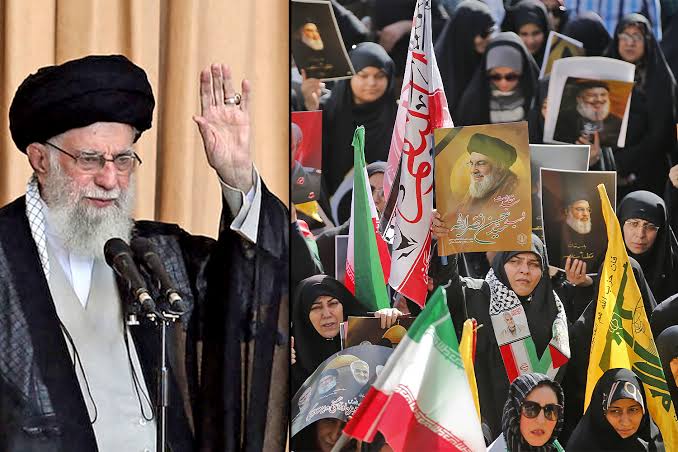
The decision-making authority in Iran remains highly centralised but operationally fragmented as supreme leader Ayatollah Ali Khamenei retains ultimate control over strategic policy, security institutions, and elite appointments, yet crisis management is increasingly delegated to security bodies and informal networks. This has elevated the role of the Islamic Revolutionary Guard Corps (IRGC) as the primary enforcer of internal stability, while simultaneously narrowing the scope for political mediation or reformist signalling. Additionally, President Masoud Pezeshkian’s administration is tasked with managing economic fallout and public communication, but lacks meaningful control over security forces or judicial processes. As protests escalate, executive authority is constrained by unelected institutions, limiting the government’s ability to pursue de-escalatory measures.
The unfolding crisis also highlights significant regional variations in both mobilisation and vulnerability across Iran. The major urban centres remain the focal points of protest activity, where higher population density and greater digital access facilitate coordination and information flow. In contrast, rural regions are shaped by distinct local dynamics, including resource scarcity, ethnic minority mobilisation, and longstanding socio-economic grievances. These disparities directly influence government responses, determining how security forces are deployed and how limited economic relief is distributed. It is also reported that certain border provinces adjoining Iraq and Afghanistan face heightened instability due to cross-border movements, potential refugee inflows, and the growing risk of armed groups seeking to exploit weakened state control.
At the same time, Iran’s operational environment is increasingly affected by external scrutiny and constrained international engagement.The ongoing UN assessments, human rights investigations, and foreign media reporting have intensified Tehran’s sensitivity to both sanctions pressure and reputational costs. Although Russia and China continue to provide political alignment and selective economic cooperation, their support remains transactional in nature and does not provide operational relief for domestic enforcement or economic shortages.
Geopolitical Tensions: Iran’s Regional and International Posture
Iran’s domestic turmoil is reverberating across the Middle East, influencing both regional calculations and global strategic priorities. As domestic unrest dominates Tehran, neighbouring states and external powers are reassessing their security, diplomatic, and economic engagement with the country. In this volatile geopolitical environment, some states are viewing Iran’s vulnerability as an opportunity while others as a source of regional risk. This has intensified existing geopolitical rivalries, heightened the stakes of Iran’s proxy networks, and complicated great-power competition in the region.
Region Rivalries and Strategic Calculations:
The key Middle eastern states, particularly Saudi Arabia, the United Arab Emirates, and Israel are closely monitoring Iran’s internal situation to assess potential shifts in influence. Israel occupies a central role in this tense environment as it continues to focus on intelligence and military readiness to counter potential threats from Iranian-backed actors in Lebanon and Syria, while simultaneously evaluating opportunities to pressure Iran through international diplomatic channels. Iran faces a dual calculation of either exploiting Iranian vulnerability or preventing a broader regional escalation that could draw in Hezbollah or provoke Iranian missile responses.
In the Gulf, Saudi Arabia and UAE have adopted a cautious posture as instability in Tehran presents both a threat and an opportunity. The recent years of limited diplomatic engagement with Tehran have reduced immediate tensions, but Iran’s internal crisis has revived concerns about regional spillover. On one hand, a weakened Iran could reduce the operational capacity of Iranian-aligned militias in Iraq, Syria, Lebanon, and Yemen, allowing Gulf states to strengthen their own regional position but on the other hand, Gulf states are particularly sensitive to threats to maritime security, energy infrastructure, and trade routes. Hence, while Riyadh and Abu Dhabi are unlikely to pursue overt confrontation, they are hedging through strengthened security cooperation with Western partners and increased diplomatic engagement to prevent instability from spreading across the Gulf.
The regional actors have to be cautious as conversely, the leadership in Tehran may seek to compensate for internal weakness by escalating its involvement in regional conflicts or using its proxy networks as instruments of coercive diplomacy, increasing the risk of confrontation along multiple fronts.
Proxy Networks and Regional Security:
Iran’s regional influence is heavily mediated through proxy groups and allied militias who are viewed as both a strategic asset and a liability. The non-state actors including Hezbollah in Lebanon, militias in Iraq, and the Houthis in Yemen, provide Tehran with leverage and deterrence, but they also risk acting autonomously as Iran’s ability to coordinate and finance operations becomes strained.
In Iraq, the Popular Mobilization Forces (PMF) serve both as instruments of Iranian policy and as a barometer of Tehran’s ability to project power. In Lebanon, Hezbollah remains a critical vector for Iranian influence over Lebanese politics and regional security calculations. Yemen’s Houthi movement, meanwhile, provides Iran with strategic leverage against Saudi Arabia and the Gulf states. However, the current domestic instability may affect Tehran’s ability to coordinate these networks effectively, creating both tactical vulnerabilities and opportunities for adversaries to exploit gaps in operational cohesion. The reduced resources or weakened command structures could encourage proxy actors to pursue local agendas, potentially triggering escalations that Tehran neither fully controls nor desires. At the same time, Tehran could adopt more aggressive posturing through these proxies as a compensatory strategy, raising the risk of localized escalation across the region.
Great Power Dynamics:
The geopolitical tensions surrounding Iran are amplified by the involvement of major powers as the relations between Iran and the United States remain deeply adversarial and strategically frozen. The United States maintains its policy of sanctions enforcement, deterrence, and monitoring of potential military escalations, balancing caution with readiness to respond to provocations. Washington continues to avoid direct military confrontation while nuclear diplomacy is effectively stalled, with neither side possessing the political capital or trust necessary to revive negotiations.
The European states have expressed concern over human rights violations and the humanitarian consequences of unrest, with some considering targeted sanctions against individuals and institutions implicated in repression. Meanwhile, China and Russia continue to engage Tehran on a selective basis, providing diplomatic cover and limited economic cooperation. However, their support is largely transactional as neither actor is positioned to absorb significant costs to shield Iran from regional or domestic instability. This creates a situation in which Iran’s strategic leverage is diminished externally even as internal pressures escalate.
Although, Iran’s internal fragility complicates deterrence dynamics as a leadership under domestic pressure may be more inclined toward external confrontation or symbolic escalation to reassert authority, raising the risk of misinterpretation or unintended conflict, particularly in the Persian Gulf and Iraq. However, international scrutiny further shapes Iran’s geopolitical environment as human rights investigations, media coverage, and multilateral diplomatic pressure increase reputational costs for the regime, narrowing its diplomatic manoeuvring space. At the same time, the absence of a unified international response reduces the likelihood of coordinated crisis management, reinforcing a fragmented global approach to Iran.
Maritime and Energy Security:
Iran’s control over critical maritime chokepoints, particularly the Strait of Hormuz, continues to be a source of regional and global concern. Even in the absence of direct military confrontation, internal instability within Iran has the potential to reverberate across global energy markets. This period of heightened uncertainty tends to generate risk premiums, disrupt shipping insurance costs, and alter commercial routing decisions, reflecting concerns over the security of energy flows from the Gulf.
These dynamics extend beyond market reactions as perceived risks to maritime security can prompt external actors to recalibrate their naval presence, increase patrols, or enhance deterrence postures in the region. Although such adjustments, while intended to stabilise trade routes, also heighten the density of military assets in a constrained operational environment, increasing the risk of miscalculation. As a result, maritime and energy security considerations add an additional layer of strategic complexity to Tehran’s interactions with regional rivals and global
Strategic Outlook
Iran’s trajectory over the next six to twelve months is likely to be shaped less by sudden transformation than by managed instability. The Islamic Republic retains significant coercive capacity and institutional resilience, making abrupt regime collapse unlikely in the near term. However, the convergence of sustained domestic pressure, economic fragility, and external scrutiny points toward a prolonged period of strategic uncertainty in which the state’s margin for error continues to narrow.
The most probable near-term scenario is one of containment through repression, accompanied by limited economic mitigation measures. The security institutions, particularly the Islamic Revolutionary Guard Corps (IRGC) and associated paramilitary forces, are likely to remain the primary instruments of control. The periodic protest suppression may restore surface-level stability, but underlying grievances are unlikely to dissipate. Instead, unrest may become cyclical and re-emerging in response to economic shocks, policy missteps, or symbolic political moments, placing continuous strain on state capacity and legitimacy.
At the same time, the leadership faces significant constraints on reform as structural economic recovery remains improbable under existing sanctions regimes, while meaningful political concessions risk undermining elite cohesion. This limits Tehran’s strategic options to incremental adjustments rather than systemic change. As a result, the state may prioritise tactical survival over long-term stabilisation, reinforcing a security-first governance model that further entrenches popular alienation.
Externally, Iran’s internal pressures increase the likelihood of calibrated risk-taking rather than strategic restraint. The leadership under domestic strain may view controlled external assertiveness through diplomatic signalling, proxy activity, or maritime posturing, as a means of reinforcing deterrence and projecting resilience. However, such actions carry heightened escalation risks, particularly given the dense military environment in the Gulf and the persistence of covert confrontation with Israel. The potential for miscalculation is amplified by weakened strategic coherence and reduced diplomatic bandwidth.
A critical variable shaping the outlook is elite cohesion, particularly surrounding succession dynamics at the highest levels of leadership. While succession may not be imminent, uncertainty surrounding future authority structures incentivises key institutions to consolidate influence and hedge against potential shifts. This could lead to more assertive behaviour by security actors, reduced coordination across institutions, and a preference for hardline positions in both domestic and foreign policy. Fragmentation at the elite level would not necessarily produce immediate instability, but it would complicate crisis management and strategic signalling.
Iran’s regional posture is also likely to evolve unevenly. While Tehran will seek to preserve its network of regional partners, financial and operational constraints may limit its ability to exercise tight control. This raises the risk of proxy actors acting autonomously, generating escalations that Iran neither fully directs nor easily contains. Such dynamics could draw regional actors into confrontations that originate not from deliberate strategy but from decentralised decision-making under stress.
Taken together, the strategic outlook suggests a period defined by durability without stability. Iran is likely to endure as a political system, but with diminishing flexibility and increasing exposure to internal and external shocks. The absence of viable diplomatic off-ramps, combined with entrenched governance practices, increases the probability that future crises will be more difficult to manage than those of the past.
Implications for the Regional Global Order
Iran’s current trajectory carries significant implications for regional security and global stability as prolonged internal strain combined with external pressure increases the risk of spillover across an already fragile Middle Eastern security environment. The escalation through proxy networks, maritime incidents in the Gulf, or miscalculation involving regional rivals could destabilise existing deterrence arrangements and draw external actors into unintended confrontations. At the same time, uncertainty surrounding Iran’s nuclear posture and the continued erosion of diplomatic frameworks weaken non-proliferation norms, raising concerns about crisis-driven nuclear signalling and setting destabilising precedents beyond the region.
Beyond the Middle East, instability in Iran has broader global repercussions as energy markets remain highly sensitive to developments affecting the Strait of Hormuz, with even perceived risks generating volatility in prices, insurance costs, and shipping routes. The crisis also exposes the limits of great-power influence, as Russia and China provide only constrained, transactional support while Western responses remain fragmented. More broadly, Iran’s experience underscores the growing tension between authoritarian durability and popular mobilisation, reinforcing debates over governance, legitimacy, and international accountability. How global actors respond will shape not only Iran’s future, but also wider norms governing crisis management, energy security, and political stability in an increasingly contested international order.
Conclusion
In sum, Iran is at the centre of a high-risk geopolitical moment as its internal crisis is not confined to its borders but carries profound regional and global consequences. The escalating unrest, elite fragmentation, and constrained state capacity increase the risk of spillover through proxies, maritime tensions in the Gulf, and miscalculations with regional rivals. The erosion of diplomatic frameworks and non-proliferation norms further underscores the international stakes, as does the broader lesson that authoritarian resilience faces increasing pressure from popular mobilisation. How Iran navigates this period will shape not only its domestic stability but also the trajectory of regional security, global energy security, and international norms governing crisis management.
Manisha Shrivastava is a GPIU Fellow at the Sixteenth Council