The Big Beautiful Bill: Domestic Vision, Global Ripples
Donald Trump’s “Big Beautiful Bill,” passed on July 4, 2025, delivers sweeping tax cuts and boosts defense and immigration enforcement, but faces sharp criticism over its impact on debt and social safety nets. While the administration touts economic benefits, the bill reallocates Medicaid and SNAP funding to states and imposes new work requirements. Internationally, Trump’s tariff strategy—especially on countries like South Africa—raises economic uncertainty. The bill marks a bold, polarising vision with far-reaching domestic and global implications.

Overview of the Bill
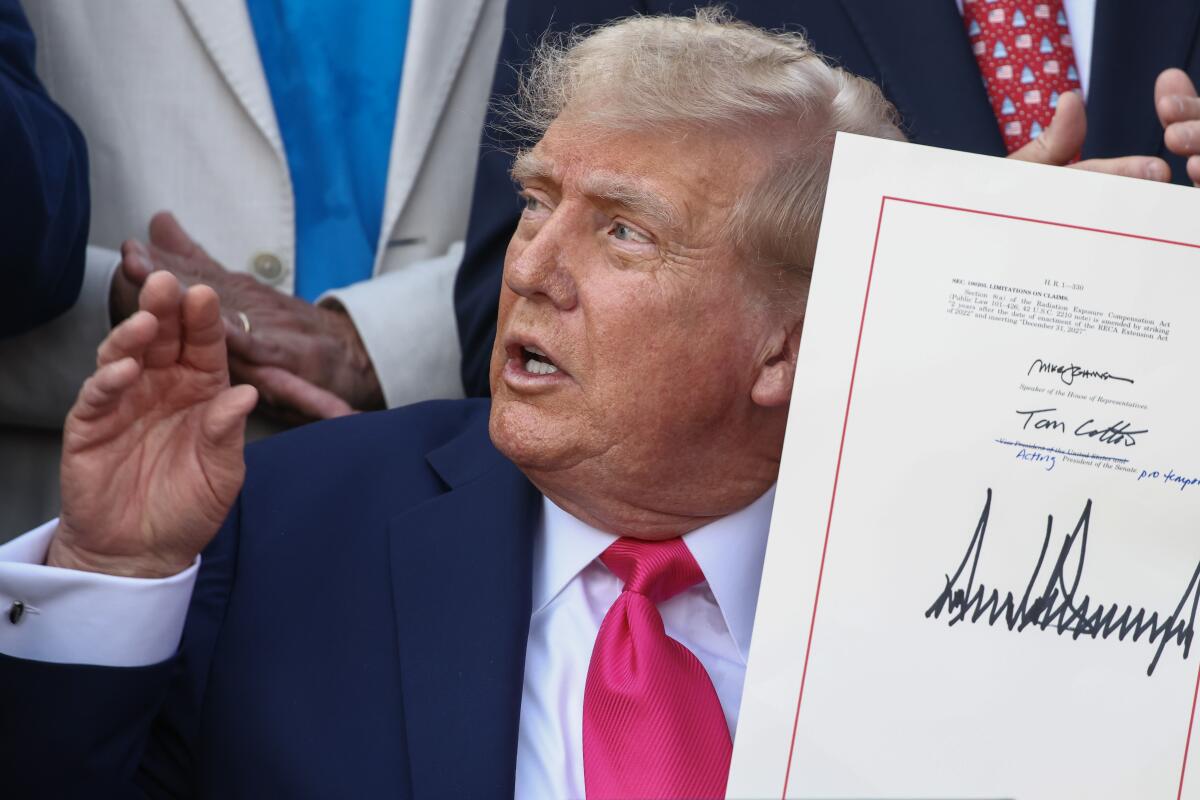
Signed into law on July 4, 2025, The Big Beautiful Bill (BBB) is the Trump administration’s signature legislative package for its second term—framed as a comprehensive attempt to “restore American greatness through strength, discipline, and sovereignty.”
The White House highlights key provisions:
- Tax Cuts: A 15% reduction for Americans earning $30,000 to $80,000.
- Government Spending: Cuts across several departments aimed at reducing bureaucratic overhead.
- Border Security: Increased funding for ICE and the southern border wall (Sec. 90001).
- Fraud Prevention: Claimed crackdown on abuse in Medicaid and SNAP programs.
Key Controversies
Despite Republican control of both chambers, the bill sparked bipartisan unease:
- Soaring Debt: The Congressional Budget Office estimates the bill will add $3.3 trillion to the federal deficit by 2035.
- Safety Net Reforms:
- Medicaid: Enrollees must work 80 hours/month by December 2026; funding shifted to states.
- SNAP: Work requirement age raised to 64 by 2028.
- Climate and Energy Cuts: Elimination of green energy subsidies (Chapter 5).
- Defense Spending: Sharp increases under Sections 20006–20007.
Opposition from moderate Republicans like Rep. Keith Self suggests growing intra-party rifts over fiscal sustainability.
Global and African Implications
1. Erosion of Confidence in U.S. Stability
International markets reacted sharply on “Liberation Day”, when President Trump announced sweeping new tariffs. After markets tumbled, the White House walked back the harshest measures—pausing most new tariffs for 90 days, yet retaining a 10% levy.
2. Targeted Tariffs on Africa
Trump’s revised tariff list imposes a 30% duty on South Africa, effective August 1st. Other countries face varying penalties depending on their trade relations and “strategic alignment” with U.S. interests.
This poses significant risks for African economies like South Africa, where the U.S. is the second-largest trading partner, particularly in automotive exports, fruit, and industrial metals.
3. U.S. Unpredictability as a Systemic Risk
Combined with the BBB’s weakening of U.S. safety nets and rising debt, these tariff shifts create a volatile policy environment that could:
- Undermine global investor confidence
- Trigger retaliatory trade barriers
- Reduce U.S. economic influence in Africa
Conclusion
While The Big Beautiful Bill may fulfill ideological ambitions of Trump’s base—tax cuts, nationalism, and reduced federal oversight—it signals rising isolationism and unpredictability. For Africa and the broader international community, the consequences will hinge on how effectively governments hedge against a more transactional, debt-fueled, and protectionist America.
Christian Jimenez is a fellow at the Global Policy Intelligence Unit of the Sixteenth Council