USAID: A Wolf in Sheep’s Clothing in Africa
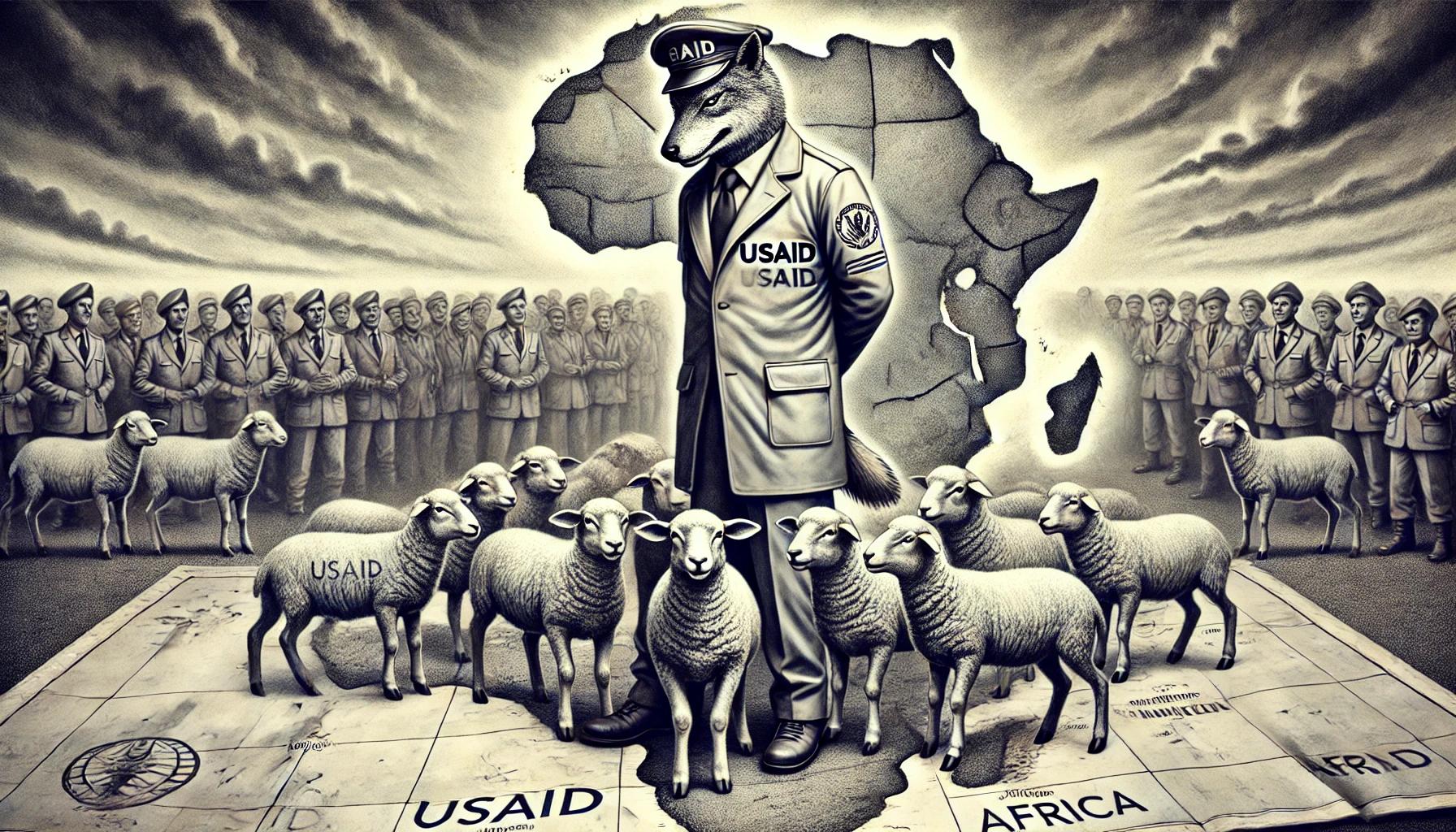
Rather than fostering sustainable growth, USAID has entrenched Africa in cycles of dependency, undermined local industries, and facilitated the continued plundering of the continent’s vast natural wealth. This article unveils the evidence behind USAID’s true role in Africa and highlights how leaders like Captain Ibrahim Traoré of Burkina Faso are forging a bold path towards sovereignty, free from the manipulative grip of foreign aid.

For decades, Africa has been bombarded with foreign aid under the pretext of humanitarian assistance, economic development, and political stability. The United States Agency for International Development (USAID) is among the most visible actors in this narrative, branding itself as a force for good. However, beneath the carefully curated image of benevolence lies a more sinister reality: USAID has functioned as a tool of economic subjugation, political interference, and resource exploitation.
Rather than fostering sustainable growth, USAID has entrenched Africa in cycles of dependency, undermined local industries, and facilitated the continued plundering of the continent’s vast natural wealth. This article unveils the evidence behind USAID’s true role in Africa and highlights how leaders like Captain Ibrahim Traoré of Burkina Faso are forging a bold path towards sovereignty, free from the manipulative grip of foreign aid.
USAID’s Economic Control: Development or Dependency?
1. The Illusion of Aid: Structural Adjustments and Debt Entrapment
USAID’s financial assistance often comes with strings attached—policy conditions that force African nations into economic servitude. The infamous Structural Adjustment Programs (SAPs), pushed by USAID-backed institutions like the International Monetary Fund (IMF) and the World Bank, have devastated African economies under the guise of fiscal discipline.
Impact of SAPs in Africa
According to a 2021 study by the African Development Bank (AfDB):
• Over 70% of SAP-implemented countries experienced a decline in economic growth within five years of adoption.
• Privatisation of state-owned enterprises led to mass layoffs, creating widespread unemployment.
• Education and healthcare budgets were slashed, worsening literacy rates and public health indicators.
For example, in Zambia, SAP-driven privatisation policies led to the closure of 257 state-owned enterprises, allowing foreign corporations to seize control of key industries, while unemployment surged to over 50% by the early 2000s.
Foreign Corporations Over African Businesses
USAID claims to support African economic growth, yet its policies often prioritise Western corporations over local enterprises. Take, for example, the Power Africa Initiative, a project intended to expand electricity access across the continent. While the initiative promised progress, much of the funding went to American multinational companies like General Electric and Symbion Power, sidelining African-owned energy firms.
A 2023 report by the Centre for African Policy and Research (CAPR) found that:
• 80% of USAID’s Power Africa contracts were awarded to non-African firms.
• African governments were pressured into agreements that benefited foreign companies while saddling them with debt.
• Only 15% of the allocated funds reached African-led initiatives.
Similarly, in agriculture, USAID has aggressively promoted genetically modified (GMO) seeds from U.S. biotech giants like Monsanto. These seeds are designed to be non-replicable, forcing African farmers to purchase new seeds every planting season, creating long-term dependence on foreign suppliers instead of fostering agricultural self-sufficiency.
USAID and Africa’s Natural Resources: Who Really Benefits?
1. Foreign Aid and Resource-Rich Regions
USAID’s presence is heavily concentrated in countries rich in natural resources, raising serious concerns about whether its true mission is development or resource extraction. For example, in the Democratic Republic of Congo (DRC), a nation with some of the world’s largest cobalt and coltan reserves, USAID has funded multiple “governance improvement” programs. However, these initiatives have done little to benefit Congolese citizens, while multinational mining corporations continue to dominate the sector.
A 2022 investigative report by Global Witness revealed that:
• Over 60% of mining contracts in the DRC involve foreign corporations, mainly from the U.S. and Europe.
• USAID-backed programs have helped legitimise exploitative contracts, allowing foreign companies to access resources under the pretense of promoting “transparency.”
• The Congolese government receives less than 10% of the total revenue generated by its mineral wealth.
This pattern is not unique to the DRC. In Mozambique, USAID invested $300 million in “economic reform” programs just as U.S. companies secured lucrative contracts for the country’s natural gas reserves. These so-called reforms paved the way for Western firms to extract resources with minimal local benefit.
2. Aid as a Political Weapon
USAID’s aid distribution is not neutral—it is a strategic tool used to punish governments that resist Western control and reward those that comply. Nations that align with U.S. foreign policy receive generous assistance, while those that assert their sovereignty face economic blackmail.
Case Study: USAID’s Political Influence in Malawi
In early 2025, the U.S. froze over $350 million in aid to Malawi, citing “governance concerns.” However, political analysts argue that the true reason was Malawi’s decision to reject a military cooperation deal with the U.S.. As a result, essential services like healthcare, education, and infrastructure projects suffered, demonstrating how aid is weaponised to manipulate African governments.
The Traoré Model: A Blueprint for African Sovereignty
1. Burkina Faso’s Bold Stand Against Foreign Exploitation
Under Captain Ibrahim Traoré, Burkina Faso has embarked on a historic path towards economic and political independence, rejecting Western-dominated aid models. Since assuming power in 2022, Traoré has:
• Nationalised gold mining operations, ensuring local control over resources.
• Severed exploitative military agreements with Western powers, strengthening Burkina Faso’s self-reliance.
• Invested in domestic agriculture and industry, reducing reliance on foreign imports.
His policies have led to a 30% increase in domestic revenue from resource extraction in just two years, proving that African nations can thrive without foreign aid if they control their own wealth.
2. Lessons for Other African Leaders
Traoré’s leadership offers a model for the entire continent. His approach proves that African nations do not need to beg for aid—they need to assert control over their own economies. If more leaders adopt similar policies, Africa can break free from the cycle of dependency and chart its own future.
Conclusion: Africa Must Reclaim Its Sovereignty
USAID presents itself as a saviour, but the facts reveal a different story—one of economic entrapment, political manipulation, and resource exploitation. The evidence is undeniable:
• Structural Adjustment Programs crippled African economies.
• Foreign corporations, backed by USAID, dominate key industries.
• Natural resources continue to enrich foreign entities while Africans remain impoverished.
The solution is clear: Africa must reject the Trojan horse of foreign aid and embrace self-reliance. The rise of leaders like Captain Ibrahim Traoré signals the dawn of a new era—one where Africa dictates its own destiny, free from the shadows of Western manipulation.
The time for African sovereignty is now.
Aric Jabari is the Editorial Director at the Sixteenth Council