
Trapped by Design? How the IMF & World Bank Keep Africa in a Perpetual Debt Cycle—The Hidden Truth About the Bretton Woods System
In the aftermath of the Great Depression and during the climactic years of World War II, global economic stability was in jeopardy. While many are aware that African nations owe vast sums to the International Monetary Fund and the World Bank, few realise that these two institutions are, in fact, integral parts of the historic Bretton Woods system.

Did you know that the roots of Africa’s current debt crisis can be traced back to a revolutionary financial blueprint crafted in the aftermath of the Second World War? While many are aware that African nations owe vast sums to the International Monetary Fund and the World Bank, few realise that these two institutions are, in fact, integral parts of the historic Bretton Woods system. Prepare to embark on a fascinating journey as we uncover how this post-war pact not only reshaped global finance but also continues to cast a long shadow over Africa’s economic future.
I. Historical Context: The Formation of the Bretton Woods System
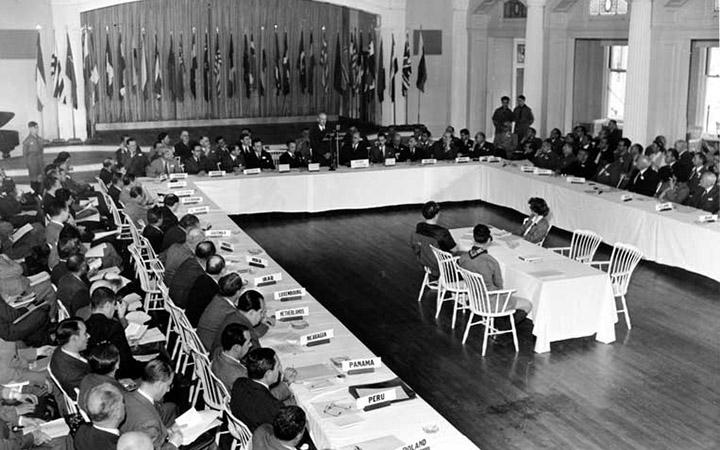
In the aftermath of the Great Depression and during the climactic years of World War II, global economic stability was in jeopardy. Leaders recognised the need for a new international financial architecture to avoid the protectionist policies and currency wars that had exacerbated economic instability in the 1930s. This realisation led to the historic United Nations Monetary and Financial Conference held in Bretton Woods, New Hampshire, USA, from 1–22 July 1944.
Key Figures and Dates
● John Maynard Keynes (UK): An influential economist who envisioned a global system of economic cooperation.
● Harry Dexter White (USA): The chief negotiator for the United States, whose ideas heavily influenced the system’s design.
● 44 Allied Nations: Represented at Bretton Woods, including major economies such as the United States and the United Kingdom.
Objectives and Outcomes
The conference aimed to create a stable international monetary system, promote global economic growth and prevent a repeat of the economic calamities of the 1930s. The outcome was the establishment of a system of fixed exchange rates pegged to the US dollar, which was convertible to gold at a fixed rate of US$35 per ounce. This arrangement provided predictable currency values, thereby fostering international trade and investment. Furthermore, it laid the groundwork for two pivotal institutions: the International Monetary Fund (IMF) and the World Bank (originally the International Bank for Reconstruction and Development, or IBRD).
Evidence:
● The Bretton Woods Conference (1944) is documented extensively in historical records such as the U.S. National Archives (Washington, DC) and economic literature (Eichengreen, 2008, “Globalizing Capital: A History of the International Monetary System”).
● Statistical analyses indicate that the fixed exchange rate system contributed to a period of economic growth in the post-war era (World Bank Archives, Washington, DC).
II. The Bretton Woods System: Mechanism, Operation, and Expansion
A. What is the Bretton Woods System?
The Bretton Woods system was an international monetary order designed to provide monetary stability and economic cooperation. Its central features included:
● Fixed Exchange Rates: Currencies were pegged to the US dollar, which in turn was convertible to gold.
● Institutional Oversight: The IMF and the World Bank were created to monitor and support international monetary cooperation and reconstruction efforts.
B. Operational Details and Leadership
● Operation Period: The system was operational from 1944 until 1971, when President Richard Nixon announced the suspension of gold convertibility—a move now known as the “Nixon Shock” (September 1971).
● Leadership and Governance: The system was shaped by negotiations among the participating nations with leadership from key figures like Keynes and White. The system’s policies were guided by committees representing the major economies, ensuring that decisions reflected a consensus approach.
Primary Goals:
● Stabilisation of Currencies: To prevent the volatile currency fluctuations that had plagued the interwar period.
● Facilitation of Global Trade: By providing a predictable financial environment that would encourage international commerce.
● Economic Reconstruction: Post-war, there was a strong focus on rebuilding war-torn economies, particularly in Europe.
Challenges Faced:
● Balancing National Interests: Diverging economic priorities and political interests often complicated the establishment of uniform policies.
● Economic Imbalances: The fixed exchange rate system eventually led to imbalances, as some currencies became overvalued or undervalued relative to their economic fundamentals.
● Expansion: As new countries gained independence, the system had to adapt. Early members primarily included Western industrialised nations; over time, developing economies, including many in Africa, were invited to join, often under conditions that favoured the established powers.
Evidence:
● Detailed records from the Bretton Woods Conference and subsequent IMF reports (IMF Annual Report, 1945–1971) provide comprehensive insights into these challenges and adaptations.
III. From Bretton Woods to the IMF and World Bank
A. Establishment of the IMF and the World Bank
Both institutions were conceived as pillars of the Bretton Woods system:
● International Monetary Fund (IMF): Founded in 1944 and became operational in 1945, its primary mandate was to ensure the stability of the international monetary system by providing short-term financial assistance to countries facing balance of payments problems.
● World Bank: Also established in 1944, initially focused on the reconstruction of war-affected nations. Over time, its role expanded to funding long-term development projects in developing countries.
B. Laws and Funding Mechanisms
● Legal Framework: The Articles of Agreement of the IMF and the World Bank serve as their constitutional documents. They outline membership rules, financial obligations, and decision-making processes.
● Funding Sources:
○ The IMF’s funds come from its member countries’ quotas, which are based on their relative economic size.
○ The World Bank raises funds through bond issuance in international financial markets rather than “printing money.” This ensures that loans are backed by the financial markets and the credibility of its member nations.
Evidence:
● Official documents such as the “Articles of Agreement” (IMF, 1944) and World Bank archival records (World Bank, 1944) are key primary sources.
● Analysis by economists such as Dani Rodrik (2006) highlights the evolution of these institutions’ mandates over the decades.
IV. How the Bretton Woods System Has Contributed to Africa’s Debt Crisis
A. High-Interest Loans and Debt Traps
African nations, in their post-colonial development journeys, have often resorted to borrowing from the IMF and the World Bank. However, these loans typically come with stringent conditions and high interest rates, contributing to a cycle of dependency and chronic indebtedness.
Mechanism:
1. Loan Issuance: Loans are extended to African countries based on projected economic reforms, infrastructure projects, or balance of payments support.
2. Conditionalities: Borrowing countries must implement structural adjustment policies, including austerity measures, privatisation, and market liberalisation.
3. Interest Rates and Repayment: Often, the interest rates are higher than sustainable growth rates, leading to ballooning debt burdens.
B. A Simple Calculation: The Case of the Democratic Republic of the Congo (DRC)
Consider a hypothetical scenario where the DRC borrows US$10 billion at an annual interest rate of 8%.
● Annual Interest Payment:
$10 billion multiplied by 0.08 (8%) equals $0.8 billion (US$800 million) per year.
● Debt Service Over 15 Years:
Multiplying the annual interest of $0.8 billion by 15 years results in a total of $12 billion.
Thus, even if the principal is repaid, the country pays an additional 20% of the borrowed amount in interest. For a nation with limited economic growth and revenue generation capacity, such repayment obligations can create a “debt trap” that undermines long-term development.
Legal and Operational Aspects:
● Collateral and Conditions: African nations often secure these loans with future revenues from natural resources or infrastructure projects.
● Sanctions: Failure to meet repayment terms may result in economic sanctions, loss of access to further funding, or pressure to implement further austerity measures.
Evidence:
● The World Bank and IMF’s official documentation (World Bank Annual Report, IMF Financial Stability Review) details these conditions.
● Independent research by scholars such as Kevin Gallagher and Calum G. Turvey (2015) provides data and case studies on the debt dynamics in sub-Saharan Africa.
V. Case Studies of Debt Traps in Africa
Beyond the DRC, several African countries have experienced similar debt-related challenges:
● Ghana: Faced debt rescheduling in the 1980s and 1990s due to structural adjustment programmes that increased its debt-to-GDP ratio.
● Zambia and Mozambique: These nations have struggled with high-interest debt packages, leading to dependency on external funding and limited fiscal space for social services.
● Nigeria: Despite its oil wealth, recurring debt obligations have hindered economic diversification and infrastructural development.
Evidence:
● Reports from the United Nations Conference on Trade and Development (UNCTAD) and IMF Country Reports provide detailed statistics and timelines for these cases.
VI. Renegotiating Debt: A Scenario for the DRC
A. Current Situation and Strategic Renegotiation
For a country like the DRC, debt renegotiation could involve:
● Extended Repayment Terms: Lengthening the repayment period to reduce annual debt service obligations.
● Reduced Interest Rates: Negotiating lower interest rates through debt swaps or multilateral discussions.
● Debt Forgiveness: Partial forgiveness contingent on economic reforms or increased investment in sustainable projects.
Assume the DRC negotiates to extend its US$10 billion debt over 30 years instead of 15 years, and the interest rate is reduced to 5%.
● Annual Interest Payment: For a US$10 billion loan at a 5% interest rate, you pay US$500 million per year (10 billion × 0.05 = 0.5 billion).
● Debt Service Over 30 Years: Over 30 years, this annual payment adds up to US$15 billion (0.5 billion × 30 = 15 billion).
While the total interest paid may be higher over the life of the loan, the lower annual burden could free up fiscal space for essential services and economic development. Renegotiations would likely involve international mediators and require robust financial governance reforms.
Evidence:
● IMF case studies on debt restructuring (IMF Debt Sustainability Analysis, 2019) and regional studies by the African Development Bank (AfDB Reports, 2020) support such approaches.
VII. Lessons for African Political Leaders and Strategies for Financial Sovereignty
1. Economic Autonomy:
African leaders must prioritise the creation of homegrown economic policies that are less dependent on external prescriptions.
2. Regional Cooperation:
Strengthening institutions such as the African Continental Free Trade Area (AfCFTA) can foster intra-African trade and reduce reliance on Western-dominated financial institutions.
3. Investment in Local Capacities:
Building robust domestic financial systems, including regional banks and investment funds, will allow for better negotiation power and financial self-determination.
B. Current and Future Initiatives
● The AfCFTA: Launched in 2018, this agreement aims to create a single continental market for goods and services, promoting economic diversification and reducing dependency on external loans.
● New Development Banks: Initiatives such as the African Export-Import Bank and proposals for an African Monetary Fund highlight regional efforts to establish alternative financial mechanisms.
Evidence:
● Publications by the AfDB, UNCTAD, and academic journals (e.g., The Journal of African Economies) provide insights into these initiatives and their potential impact.
VIII. Evaluating the Impact of the IMF & World Bank in Africa
A. Achievements and Shortcomings
While the IMF and World Bank were established to support global economic stability and reconstruction, their impact in Africa is mixed:
● Achievements:
○ Provision of emergency funding during economic crises.
○ Funding for infrastructure and social projects in some instances.
● Shortcomings:
○ Structural adjustment programmes have, in many cases, exacerbated poverty and inequality.
○ Conditionalities have often led to austerity measures that undermine long-term development.
● Statistical Data: Studies by the United Nations Economic Commission for Africa (UNECA) and independent economists have shown that the debt-to-GDP ratios in several African nations have increased steadily since the 1980s.
● Anecdotal Evidence: Interviews with African policymakers and economic analysts reveal widespread concerns regarding sovereignty and economic dependency.
IX. A Way Forward: Crafting an African Bretton Woods System
A. Vision for a Financially Sovereign Africa
To break free from the cycle of debt traps, Africa could envision a regional financial system that mirrors the collaborative spirit of Bretton Woods but is tailored to local needs. This would include:
● Establishing a Continental Monetary Fund: A multilateral institution owned and governed by African nations to provide low-interest, flexible loans for development.
● Regional Financial Infrastructure: Strengthening regional banks and financial markets to mobilise domestic savings and investment.
● Policy Harmonisation: Coordinated fiscal and monetary policies across African states to create a stable economic environment conducive to sustainable growth.
1. Institutional Reforms:
Reform existing regional institutions and create new ones that are transparent, accountable, and focused on development.
2. Diversified Funding:
Move away from overreliance on external debt by promoting local capital markets and leveraging remittances and diaspora investments.
3. Economic Integration:
Enhance intra-African trade and investment through initiatives like the AfCFTA, reducing the need for foreign loans and mitigating the impact of global market fluctuations.
Evidence:
● Policy proposals and white papers from the AfDB (2021) and economic analyses by scholars such as V. S. Naidu and B. L. Chanda (2020) underscore the feasibility of such an approach.
X. Conclusion: A Call for African Financial Sovereignty
The Bretton Woods system, born out of the necessities of post-war reconstruction, laid the foundation for the IMF and the World Bank—institutions that have profoundly influenced global finance and, particularly, African economies. While these institutions were designed to stabilise international markets, the imposition of high-interest loans and strict conditionalities has, in many cases, led African nations into cycles of debt and dependency.
It is now imperative for African political leaders and policymakers to learn from past experiences. By embracing regional cooperation, investing in local financial infrastructures, and forging an independent path towards economic sovereignty, Africa can begin to redress the imbalances of the past. The creation of a uniquely African financial system—akin to a homegrown Bretton Woods—could empower nations to support sustainable development without the burdens of exploitative debt traps.
In this call for change, there is both a historical lesson and an urgent necessity. The future of Africa’s economic stability and prosperity depends on a collective will to break free from the chains of past financial dependencies and to build an inclusive, resilient, and self-reliant economic order.
Aric Jabari is the Editorial Director of the Sixteenth Council.
Critical Minerals and the Green Transition: Europe’s New Dependency Risk