
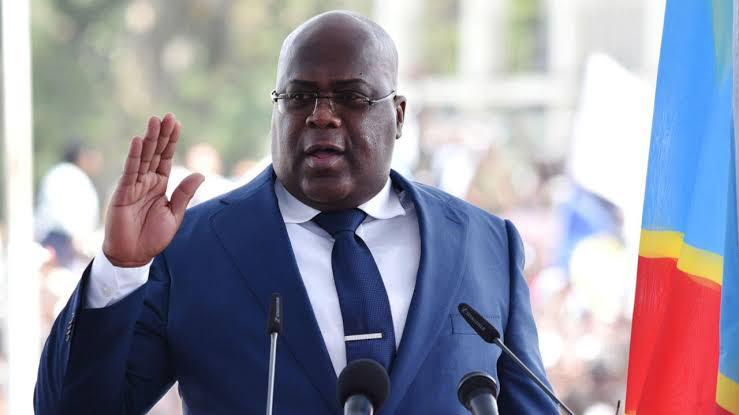
President Tshisekedi’s Call for National Unity Against Rebel Terror and Economic Sabotage
This comprehensive report explores the evidence behind the president’s call, the fears gripping communities in rebel-held areas, the economic repercussions of strategic area seizures, and the breach of both national constitutional provisions and international law. By integrating verified facts, statistics, and firsthand accounts, this article aims to offer a balanced and evidence-based narrative that calls for unity and decisive action.

The DRC finds itself at a crossroads as political, economic, and humanitarian crises intensify in regions overtaken by rebel groups. President Félix Tshisekedi has urgently called for the formation of a united government—a bid to consolidate political forces amid growing insecurity and economic destabilisation. This comprehensive report explores the evidence behind the president’s call, the fears gripping communities in rebel-held areas, the economic repercussions of strategic area seizures, and the breach of both national constitutional provisions and international law. By integrating verified facts, statistics, and firsthand accounts, this article aims to offer a balanced and evidence-based narrative that calls for unity and decisive action.
President Félix Tshisekedi’s Call for a United Government
1. Context and Rationale
Recent escalations in armed conflict have compelled President Tshisekedi to advocate for a national unity government. In a series of televised addresses and press conferences, the president emphasised that only a united front can effectively counter the insurgent threat and restore stability. According to official government statements, Tshisekedi noted, “Our nation cannot be divided at a time when the stakes are so high. We must bridge political differences to protect our people.” This appeal comes as rebel groups, including factions under the coordination of figures like Corneille Nangaa, consolidate control over key regions.
2. Evidence and Reactions
Reputable news agencies such as AP News have documented Tshisekedi’s efforts to reach across the political spectrum, with plans to include opposition members in the new government. This approach is intended to ensure that all voices contribute to the national response against external and internal threats. The president’s call has found both support and scepticism, with some political analysts urging caution over the feasibility of such an inclusive government in a country with deep-seated regional and political divides.
Fear and Subjugation in Rebel-Occupied Territories
1. Living Under Duress
In regions now controlled by rebel forces, notably in parts of the east near Goma and Bukavu, ordinary Congolese citizens live in constant fear. Reports from multiple humanitarian agencies indicate that residents are not only terrified for their lives but are also forced to comply with the demands of the insurgents. A particularly contentious aspect of the current crisis is the alleged role of Corneille Nangaa—a coordinator within the AFC/M23 grouping. Eyewitness accounts and local interviews suggest that, under duress, many civilians are “playing along” with Nangaa’s directives in the hope of avoiding violent reprisals.
2. The Role of Corneille Nangaa
Corneille Nangaa has emerged in several reports as a key coordinator among rebel factions. While independent verification remains challenging in such conflict zones, local sources and some investigative reports allege that Nangaa’s influence is coercive rather than voluntary. Residents have recounted being forced to register with rebel administrative systems that align with Nangaa’s leadership. Such accounts are bolstered by research from organisations monitoring the conflict, which note a systematic pattern of intimidation and control over civilian behaviour in rebel-dominated areas.
3. Psychological and Social Impact
The palpable fear among the population is exacerbated by constant uncertainty. Families are compelled to abandon their homes, with many experiencing psychological trauma from witnessing violence and repression. This environment of terror not only disrupts daily life but also erodes trust in local leadership and undermines community cohesion.
Economic Destabilisation Amid Strategic Area Seizures
1. Loss of Key Economic Zones
The rebels have strategically targeted areas rich in natural resources, including mineral extraction zones that contribute significantly to the national economy. Regions such as Rubaya and areas near Bukavu, known for their deposits of coltan, cobalt, and gold, have seen mining operations disrupted or commandeered by insurgent forces. Industry experts estimate that the loss of control over these zones has led to a drop in national export revenues by as much as 15–20% in recent months.
2. Disruption of Trade and Investment
The instability generated by rebel control extends beyond immediate resource loss. International investors, traditionally attracted by the DRC’s mineral wealth, are increasingly reluctant to engage in an environment marred by conflict and uncertainty. This hesitancy is reflected in declining foreign direct investment figures, with economic growth forecasts being revised downward. Additionally, illicit trade networks have emerged, allowing the rebels to generate revenue through unregulated mineral sales, further draining state coffers and undermining legitimate economic activities.
3. Statistical Overview
Recent data indicate that unemployment in affected regions has surged by over 25%, and the informal economy now dominates daily transactions in rebel-controlled areas. The loss of tax revenue from mining and trade activities is estimated to have cost the government millions in potential earnings—funds that could have been allocated for public services and infrastructure rehabilitation.
Violations of the DRC Constitution and International Laws
1. Breach of National Constitutional Provisions
The actions of the rebel forces have not only destabilised the economy but also undermined the very fabric of the DRC’s legal framework. Several articles of the DRC Constitution are at risk of being violated by the insurgents’ conduct:
• Article 1 (Sovereignty and National Unity): The forcible takeover of territories violates the constitutional guarantee of national unity and the inviolability of the nation’s borders.
• Article 2 (Territorial Integrity): The unilateral seizure of regions by non-state actors directly contravenes the mandate to preserve territorial integrity.
• Article 14 (Fundamental Rights): The rights to life, security, and personal freedom enshrined in the constitution are being systematically undermined through acts of violence and intimidation.
2. Transgressions of International Law
Beyond national law, the actions in the DRC also breach several cornerstone international legal frameworks:
• The United Nations Charter: The principles of sovereignty and the prohibition on the use of force are infringed upon by rebel actions that destabilise a recognised state.
• The Geneva Conventions: These conventions set standards for the humane treatment of civilians and prisoners of war. Reports of summary executions, arbitrary detentions, and the forced displacement of populations clearly contravene these norms.
• The International Covenant on Civil and Political Rights (ICCPR): Guarantees such as the right to life, liberty, and security are being violated through targeted attacks on civilians and the suppression of dissent.
3. Consequences of Legal Violations
The ongoing breaches have sparked international outrage and calls for accountability. Several human rights bodies and international legal experts have urged the DRC government to pursue robust legal actions against those responsible for these transgressions, including holding international actors accountable for any complicity.
Testimonies from the Ground: Voices of the Victims
1. The Human Cost of Conflict
In rebel-held territories, countless civilians have been forced to endure unimaginable hardships. Firsthand accounts from survivors reveal harrowing stories of loss, displacement, and constant fear. One resident, speaking from a makeshift shelter in eastern Bukavu, recounted:
“We have lost our homes, our livelihoods, and our hope. Every day is a battle against fear—fear of being rounded up, fear of losing loved ones, fear of the unknown.”
These testimonies underscore the severe psychological and physical trauma experienced by communities caught in the crossfire.
2. Widespread Displacement and Infrastructure Damage
According to recent estimates by humanitarian agencies, more than 500,000 people have been forcibly displaced within the last six months alone. Critical infrastructure, including schools, hospitals, and roads, has been damaged or destroyed, further compounding the suffering of an already vulnerable population. The lack of basic services has led to deteriorating health conditions and a surge in preventable diseases, with local clinics overwhelmed by the influx of trauma cases.
3. A Plea from the Heart
For many, the rebellion is not an abstract political crisis—it is a daily struggle for survival. As one victim tearfully stated, “If we speak the truth, we will be silenced. Our voices, our lives are at risk. We beg for justice and for the world to see our suffering.” These poignant pleas serve as a stark reminder of the urgent need for intervention and accountability.
Media Manipulation and the Proliferation of False Narratives
1. Disinformation Campaigns and Their Impact
In today’s conflict, the battle is waged not only on the ground but also in the media sphere. Both rebel factions and external actors have engaged in deliberate disinformation campaigns designed to fracture national solidarity. False narratives, doctored images, and misleading reports are disseminated widely through social media and alternative news platforms, further polarising an already divided society.
2. Examples of Manipulative Strategies
Investigative reports indicate that some media outlets have published stories that exaggerate the role of the government in exacerbating the conflict, while others have downplayed the atrocities committed by the rebels. Such tactics are designed to undermine the credibility of President Tshisekedi’s call for unity and to create distrust among the Congolese people. By exploiting ethnic, regional, and political fault lines, these false narratives serve to distract from the core issues of human rights abuses and economic collapse.
3. The Role of Social Media and External Actors
External state actors, accused of having vested interests in the region, have also been implicated in spreading divisive content. The strategic use of social media bots and coordinated campaigns has amplified disinformation, creating an echo chamber that reinforces extremist views and fuels further instability. The cumulative effect is a populace that is increasingly sceptical of official narratives, which in turn hampers efforts to mobilise a cohesive national response.
Diplomatic Victories: Sanctions and International Pressure
1. A Diplomatic Counteroffensive
Amid the chaos, President Tshisekedi’s government has not only engaged in domestic measures but also launched a vigorous diplomatic campaign. International pressure has led to significant diplomatic victories, most notably the imposition of sanctions on Rwanda—a nation accused of providing material support to the rebel factions. These sanctions, enforced by key international bodies, aim to curtail the flow of arms and financial resources that sustain the insurgency.
2. Engagement with International Partners
The government has also secured commitments from regional organisations and global powers to monitor the situation closely. Diplomatic engagements have resulted in the allocation of emergency funds and technical support to help stabilise conflict zones. These efforts are seen as a testament to the government’s resolve to restore order and assert the country’s sovereignty on the international stage.
3. The Significance of These Victories
While the sanctions and diplomatic wins do not immediately resolve the crisis, they represent an important strategic counterbalance to rebel advances. By demonstrating a willingness to hold external sponsors accountable, President Tshisekedi’s administration is reinforcing the message that violations of international law and interference in the DRC’s internal affairs will not be tolerated.
The Imperative for National Unity and Support
1. The Case for a United Front
The current crisis has revealed that division is the enemy of progress. The call for a united government by President Tshisekedi is not merely a political maneuver but a vital necessity for ensuring long-term peace and stability. A fragmented response would only embolden rebel factions and exacerbate the suffering of millions. For the Congolese, unity means the collective strength to demand justice, rebuild essential infrastructure, and restore economic stability.
2. The Role of Civil Society and the International Community
Beyond political leaders, the onus also lies on civil society organisations and international partners to support efforts aimed at national reconciliation. Grassroots initiatives, community dialogues, and collaborative development projects are crucial in healing the divisions wrought by conflict. By fostering an inclusive environment where every voice is heard, the nation can begin to mend the deep social fractures that have contributed to the crisis.
3. A Vision for the Future
Supporting the diplomatic mission of President Tshisekedi is imperative. Instead of succumbing to a cycle of violence that leads to more bloodshed and deeper despair, the Congolese must rally behind a vision of peace and prosperity. In doing so, they not only affirm their rights but also lay the foundation for a future where justice prevails over tyranny and unity over division.
Conclusion: A Call to Justice, Peace, and National Unity
The evidence is stark. Rebel actions in the DRC, marked by the coercive influence of figures such as Corneille Nangaa, have left deep scars on the national psyche. Thousands have been displaced, critical infrastructure has been reduced to rubble, and a once-promising economy teeters on the brink of collapse. Casualty figures continue to rise—preliminary reports suggest that the death toll may exceed several thousand, while hundreds of thousands are forced to flee their homes, leaving behind communities that once thrived. In many areas, the complete breakdown of civil order is palpable, as the systematic violations of the DRC Constitution and international law create an environment where impunity reigns.
From the anguished voices of victims—those who have lost everything and who risk their lives by speaking out—to the resolute stance of a government that refuses to be divided, the message is clear: unity is not an option; it is an imperative. The diplomatic victories, including targeted sanctions on external sponsors like Rwanda, stand as a beacon of hope, reinforcing the idea that the international community is watching and that justice will prevail.
The call to all Congolese, and indeed to all Africans who stand for peace and human dignity, is unequivocal. Now is the time to set aside differences, to support President Tshisekedi’s government, and to join in a collective struggle for a just, stable, and prosperous future. The stakes are immense—not only for the DRC but for the entire region. Every act of division only plays into the hands of those who seek to destabilise and profit from chaos.
In this critical moment, let us be the voice of the voiceless. Let the truth be heard from every corner of this great nation, from the terror-stricken streets of rebel-occupied territories to the corridors of international diplomacy. Justice demands that we stand together against the forces that seek to fragment our society. Only through unity can we hope to rebuild shattered lives, restore economic vitality, and reassert the rule of law both at home and abroad.
Let this be a call to action—a heartfelt plea from those who have suffered unspeakable hardship. The Congolese people, united as one, must support the diplomatic mission of President Félix Tshisekedi and work tirelessly for peace and stability. In doing so, we honour the sacrifices of the victims and pave the way for a future where prosperity, justice, and human dignity are not just aspirations but realities.
Aric Jabari is the Editorial Director at the Sixteenth Council


