Continuing the Fourth Transformation: Sheinbaum’s Challenges in Tackling Cartels and Economic Inequality in Mexico

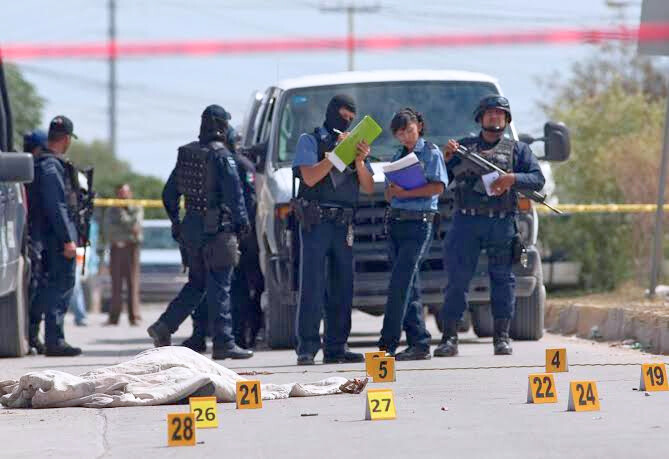
Decreasing violence has long been a political priority in Mexico, as the country remains with high homicides and violent crime rates, particularly as related to its drug cartels. Drug trade presence is not a new phenomenon in Mexico, however the high levels of violence deployed by drug traffickers is new (Herrera, 2019). Increases in such crimes can be traced back to economic liberalisation periods in the 1980s/1990s “associated with lower wages and higher rates of labor informality across Latin America” (ibid). This economic deprivation is theorised to be correlated with both increased violence, and increased cartel membership, as these offer employment opportunities. Levels of violence across Mexico are not uniform; areas with high homicide rates correspond to drug production and cartel presence areas in the country (ibid).
President Andrés Manuel López Obrador’s Legacy
Former Mexican president Andrés Manuel López Obrador (AMLO) ran his presidential campaign on a “hugs not bullets” slogan, promising a reduction in civilian casualties in addressing violence (Stevenson, 2019). In fact, AMLO implemented a mandate that armed forces only respond with equal or less force used by opposition forces (ibid). He also decriminalised all illegal drugs and promised amnesty to low-level cartel members in exchange for their cooperation and integration into civilian life (CFR, 2024). AMLO’s regime chose to focus on preventing cartel expansion, through an investment in youth populations vulnerable to cartel recruitment (Stevenson, 2019). Similarly, AMLO raised the minimum wage by 90% and increased social spending by 2% of Mexico’s GDP, investing in social security (i.e. pensions and unemployment benefits) (Werner, 2024). This strategy, AMLO has called Mexico’s “Fourth Transformation,” “ an economic strategy built on stability, redistribution, and increased government participation in the economy” (ibid).
Banco del Bienestar (Welfare Bank) System
One of AMLO’s most successful initiatives in Mexico’s Fourth Transformation has been his “Banco del Bienestar” or “Welfare Bank” system. This system targets Mexico’s poorest communities for financial inclusion, through making financial participation more accessible (Hernandez 2024). At Banco del Bienestar locations, individuals can more easily open bank accounts, receive loans (with lower borrowing costs), and access social programmes. In particular, this system focuses on historically marginalised populations, such as women and indigenous communities (ibid). At present day, Banco del Bienestar boasts 3,149 locations across all 32 Mexican states, and serves 500,000 welfare programme participants per day (ibid). This system represents a step forward in the Fourth Transformation, through tackling long standing inequalities in Mexico.
Jóvenes Construyendo el Futuro (Youth Building the Future) Program
In 2019, Mexico began its “Jóvenes Construyendo el Futuro,” or its “Youth Building the Future” program, aimed to target young people from age 18 to 29, not employed or in schooling (UN ECLAC). This program connects participants with employment, training, and schooling opportunities (ibid). In particular, the program hoped to decrease incentives for young men to join cartels through offering viable employment alternatives. There is evidence that in Mexico, young men without job prospects are most likely to join cartels – and also most affected by cartel violence (Valdez Bátiz et al., 2023). Furthermore, studies have shown that in Mexico when workers are laid off and factories leave, drug-related homicides increase significantly in areas with strong cartel presence (Dell et al., 2019). Thus, cartel expansion (in member numbers) and violence deployed by these, is – at least partially – tied to low employment opportunities. The Youth Building the Future program therefore holds a role in addressing root causes of cartel violence. However, upon implementation, the program has not targeted young men at its goal level; most program participants have been young women, and it has not reached its intended goal of preventing cartel membership on a large scale (UN ESCAP, 2019). Though high participation in the Youth Building the Future Program certainly indicates a success in reaching marginalised communities, if the Mexican state hopes to prevent cartel membership through employment programs, it may be necessary for the implementation of a more targeted program.
Mexico Under New President Claudia Sheinbaum Pardo
On October 1st, 2024, Mexico’s new President, Claudia Shienbaum Pardo, was sworn into office. Mexico’s first ever female president, Sheinbaum promises a continuation of former president AMLO’s Fourth Transformation and “hugs not bullets” approach to cartel violence. Sheinbaum has announced her goals to shift Mexico away from neoliberalism, and towards a “Mexican Humanism” focus, which prioritises the Mexican people over private companies (Hernandez, 2024). This strategy would allow investment and free trade, however only to the extent that it does not involve selling away Mexico’s natural resources to private companies (ibid). Neoliberalism is underscored by a belief that the market can solve all problems; Sheinbaum’s Mexican humanism is driven by a desire for “wealth for the Mexican people,” to be measured not exclusively through GDP, but also through quality of life for Mexico’s citizens (ibid). Thus, this strategy attempts to reverse the inequalities driven by economic liberalisation, which prioritised private companies, at the expense of the countries poorest communities.
In addressing cartels, Sheinbaum will continue a focus on young individuals vulnerable to cartel recruitment, in addition to providing resources to areas most affected by violent crime, prioritizing poor families (Tsivalashvili, 2024). Since the majority of drugs from Mexico are smuggled into the United States, Sheinbaum has announced a desire to coordinate more with the United States to prevent drugs from crossing the U.S.-Mexico border, as the U.S. has struggled with a fentanyl epidemic, largely driven by imported Mexican drugs (ibid). This collaboration will be dependent on U.S. political will under president-elect Donald Trump, whose term is set to start in January 2025. Trump has proposed a 25% tariff on all Mexican imports, largely shifting the responsibility of illegal drug control on the Mexican state (Pitas, 2024). If enacted, this tariff will have devastating consequences on the Mexican economy, as 83% of Mexican exports went to the United States in 2023 (ibid).
Cartel Power Clashes
Sheinbaum’s presidency comes at a volatile time for cartel violence, largely driven by the recent arrest of Sinaloa Cartel leader Ismael “El Mayo” Zambada (Barragán, 2024). El Mayo’s arrest on U.S. soil left a power vacuum in the Sinaloa Cartel, causing a war between those following El Mayo’s son, “El Mayo Flaco,” and “Los Chapitos,” led by Joaquín “El Chapo” Guzmán’s sons in pursuit of control of the Cartel (Barragán, 2024). These power struggles have created high levels of violence, dispersing across Mexico’s northern states (ibid). Given these increased cartel confrontations in Mexico, whether Sheinbaum will be able to maintain AMLO’s pre-existing “hugs not bullets” strategy has been a widely debated topic in recent weeks. “Hugs not bullets” focuses on long-term solutions for cartel violence by addressing the socioeconomic conditions which drive cartel recruitment. Thus, its methods can likely not be utilised in active high violence situations such as these power clashes, in which Sinaloa Cartel members deploy brutal measures against rivaling factions to gain Cartel leadership. Apart from new cartel violence, it is important to note that around 96% of crimes remained unsolved or unreported during AMLO’s presidency (Tsivalashvili, 2024). Yet, Sheinbaum has a proven track record of addressing violence; in her time as mayor of Mexico City, she decreased homicides due to gang violence by 50% (ibid). Mexican Security Secretary Omar García Harfuch recently announced a new policy to increase intelligence-gathering as a strategy for violence reduction, a process that will be led by civilians (Crisis Group, 2024). This echoes similar successful surveillance strategies deployed by Sheinbaum in her time as Mayor of Mexico City. Perhaps, an expansion in surveillance can yield successful results in decreasing cartel homicide rates, while maintaining AMLO’s pre-existing “hugs not bullets” initiative.
Social Security
In AMLO’s expansion of social security benefits and focus on disadvantaged populations, he did not implement tax reforms, and instead sought other sources of project funding. This was done partially through targeting government corruption and using decreased spending in these areas for social programs, and also through deploying frugality in other areas, such as education and health (Werner, 2024). Sheinbaum has indicated a desire to continue in her predecessor’s footsteps. Yet, expanding such programs will necessitate increased funding, unavailable in the government’s current budget. In 2024, 41% of the federal budget has been allocated for social spending, and Sheinbaum plans to increase this spending (Bnamericas, 2024). This will drive the public deficit to 5.9% of GDP by the end of 2024 (ibid). Addressing this deficit will either necessitate budget cutting in other areas of spending, or increased government revenue (ibid). Similarly, it is unlikely that the minimum wage can be raised further, as it is now almost equivalent to the average national wage (Werner, 2024). This means that any further increases to the minimum wage may lead to increased unemployment and increased levels of informality, as employers search for cheaper labour (ibid).
Corruption
As a means of tackling corruption, Sheinbaum has announced a judicial reform for judges to be elected, rather than appointed (DW, 2024). This reform has been largely controversial, as many believe it could, in fact, increase corruption. Elected officials may be more susceptible to pressure from cartels, especially in states with a large cartel presence (ibid). Yet on the other hand, judge elections could be a step in further democratising Mexico and placing power in the hands of the people. Elections will begin in June 2025, therefore it is too early to tell the outcome of the reform.
Conclusions
AMLO left his six-year term with an incredibly high approval rating (80%) and Sheinbaum was elected with 60% of total votes, the highest percentage ever (Werner, 2024). This indicates widespread approval of AMLO’s policies, and faith in Sheinbaum’s goals to expand upon these. We are currently merely one month into her presidency, therefore it is difficult to predict whether her policies will be successful. Given the newly increased cartel violence and presumed budgetary deficits, we will have to see whether Sheinbaum will be able to continue AMLO’s “hugs not bullets” strategy, or whether the Mexican state will be forced to deploy more militaristic campaigns to combat its cartels.
Annette Sorensen is a Fellow at the Sixteenth Council.